The earliest depictions of people in Mexico come from the gigantic head carvings of the ancient Olmec civilisation.
Each colossal head weighing between 10 and 40 tons clearly depicts the features of African people. That civilisation, which predates Mayan, Aztec and European settlements by thousands of years, developed a highly complex and structured society in the areas of Veracruz and Tabasco on the Gulf Coast of Mexico between 1500 and 400 B.C.E.
The name Olmec, meaning “rubber people” was the Aztec name for the people who first cultivated Sapodilla trees from which they extracted a natural gum called chicle that they used for chewing and for making rubber balls for use in ball games.
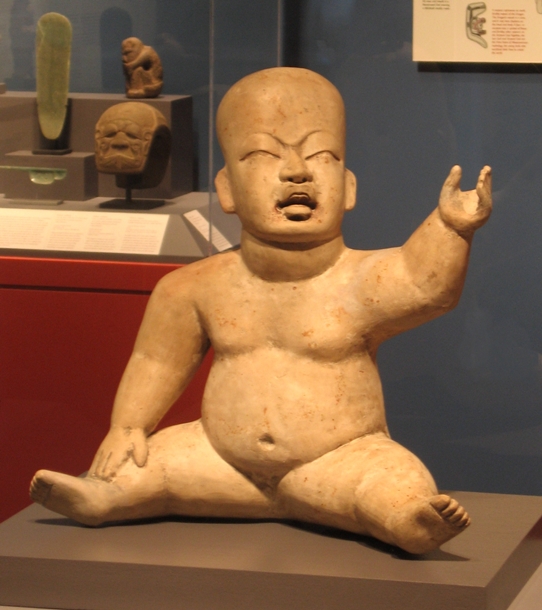
The Olmecs were the first to build towns and cities, and used their knowledge of stone masonry to develop sophisticated stone sculptures. Many of those sculptures were replications of what they saw in their homelands and included animals that were not native to the Americas.
Other sculptures were carved with scarification marks on their faces. Scarification, a form of African aesthetics, served to convey beauty, strength, and social status.
It also identified a person’s religious and political affiliations. Many figurines are also representations of people with elongated heads. Olmec nobles, like many ancient Egyptian pharaohs, practiced elongating the skull to demonstrate their elite status.

It was a rite of passage, which began when the infant was between three and six months old, and was a respected symbol of beauty, intelligence and spirituality among many of Africa’s homogeneous cultures.
Other statues depict head wear that is reminiscent of the Nemes type of headdress worn by Egyptian pharaohs. Most of the colossal heads are also sculpted with headwear; helmets, which may have been an indication that they needed to protect their heads from some kind of combat.
But who were the Olmecs, and where did they come from? In which period did they live and what were the circumstances surrounding their migration?
The Olmec time line was along the same chronological time span as the Eighteenth Dynasty ruler-ship of Pharaoh Akhenaten and the later Twenty-Fifth Dynasty of the Kushite pharaohs.
At this point, so that there is no ambiguity, we need to clarify that we are talking about the history of black Africans, not the present day Egyptians who are of Arabic descent and who did not begin to occupy Egypt until 640 C.E.