A Midnight Gazette Hands the Attorney General Two Elite Police Units. Nobody Will Say Why
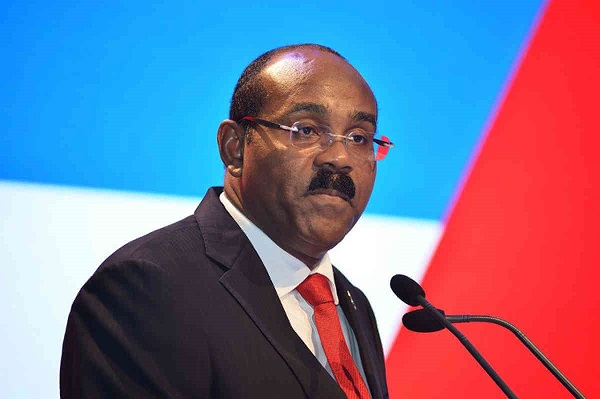
A Gazette posted after midnight gave Attorney General John Jeremie responsibility for the Vetted Unit and TOCU, and Sean Sobers COTED, with no reasons given.

Trinidad and Tobago’s Attorney General now has responsibility for two of the country’s most sensitive crime-fighting units, and the public found out from a Gazette posted just after midnight on a Saturday, with not one line of explanation.
What changed
The Gazette, dated Friday 20 November, assigns Attorney General John Jeremie responsibility for the Vetted Unit and the Transnational Organised Crime Unit. Foreign and CARICOM Affairs Minister Sean Sobers picks up the Council for Trade and Economic Development, the CARICOM body that drives regional trade policy and the Single Market and Economy. The assignments were made by President Christine Kangaloo on the advice of the prime minister under section 79(1) of the Constitution, effective the same day.
The Sobers change is housekeeping. COTED sits naturally beside a minister already in charge of CARICOM affairs, foreign policy and treaties. Nobody needs a press conference to understand it.
The Jeremie change is another matter entirely.
Why this one matters
The Transnational Organised Crime Unit has worked inside the national security and police structures for years, alongside foreign agencies including the United States Drug Enforcement Administration. The Vetted Unit was being built under the previous PNM administration; in November 2024 the Ministry of National Security and the US Embassy signed a memorandum of understanding to advance it. These are units that handle intelligence shared by foreign partners and investigate the most serious organised crime in the country.
The Attorney General is the government’s chief legal adviser and the minister closest to prosecutions and the courts. Moving operational crime-fighting units from the security ministry’s orbit to his raises an obvious question: who now gives these units their direction, and where does the line fall between the government’s lawyer and the investigators? The Gazette does not say whether the change alters operational command. It does not say what was wrong with the old arrangement. It does not say whether Washington was consulted, though both units are bound up with American cooperation.
Silence is a choice
Governments are entitled to shuffle portfolios. They are not entitled to treat the public as if it has no interest in who controls the units that investigate organised crime. Posting a change of this weight at midnight, without reasons, invites exactly the suspicion the government will later complain about.
There may be a perfectly sound rationale: tighter coordination with prosecutions, faster extradition work, a cleaner channel for foreign partners. If so, the prime minister should say it, and say how the independence of investigators from political direction will be protected. Until then the opposition, the police service and every citizen are entitled to ask what problem this solves, and for whom.