Ali Courts Morocco’s Tanger Med for a Berbice Deep-Water Port. Guyana Has Bechtel’s Study but Still No Price, Site Decision or Investor
President Irfaan Ali wants a port partnership with Morocco's Tanger Med to capture northern Brazil's trade. Bechtel is studying a Berbice deep-water port, but no cost or timetable is public.
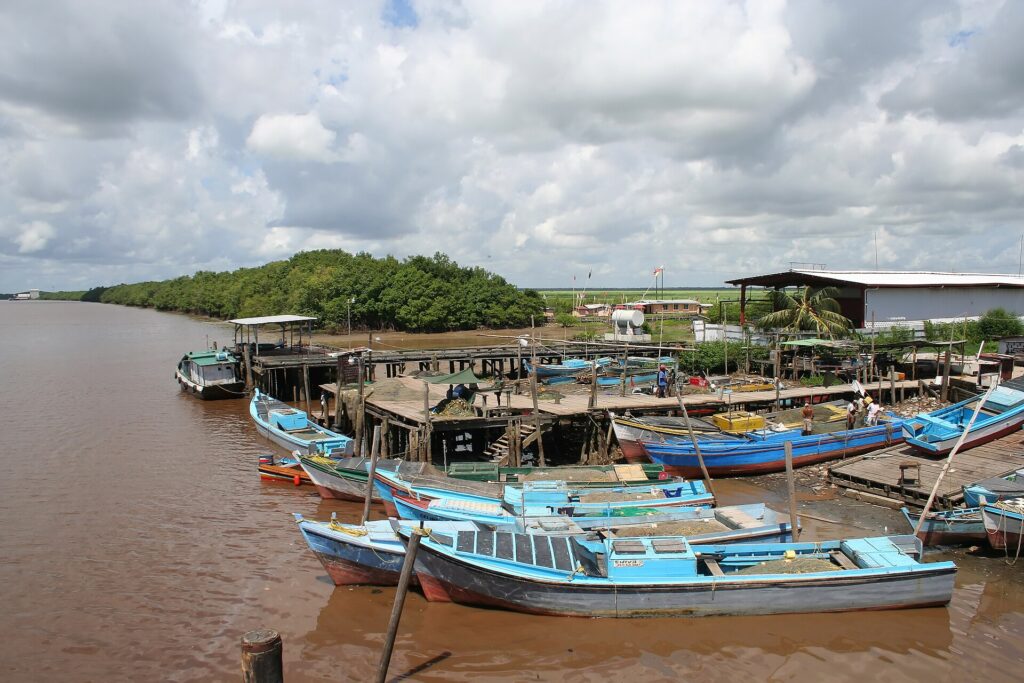
President Irfaan Ali went to Morocco with a big idea and a bigger number. A deep-water port in Guyana, linked to one of Africa’s busiest harbours, could turn the country into the sea gate for northern Brazil. The pitch is ambitious and the logic is real. What is missing is everything that turns a keynote into concrete.
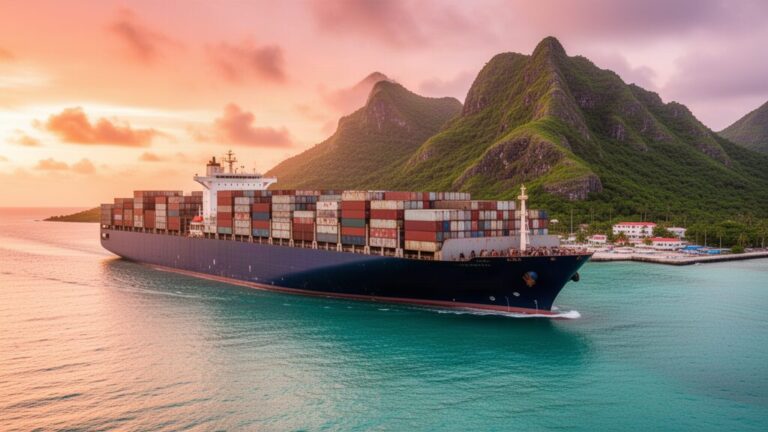
Speaking on Thursday at a special high-level session of the MEDays International Forum, titled “Africa, the Caribbean & Latin America: Building a South Atlantic Bridge in the Time of Choices”, Ali called for stronger port cooperation with Morocco as Guyana pursues its own deep-water harbour. He pointed to Tanger Med on the Strait of Gibraltar, described as Africa’s largest port and connected to more than 180 ports worldwide, and toured the complex during his visit.
The Trade Arithmetic
Ali’s case rests on Brazil. “The northern Brazil corridor exports roughly US$1.4 billion per month,” he said, adding that the state of Roraima alone exported US$350 million in soybeans, beef, poultry and sugar over the 2025 to 2026 period. He also said Morocco’s exports to Brazil reached US$2.6 billion in 2025, up from US$655 million in 2016. If even 20 per cent of that traffic were rerouted through the two ports, he argued, time and transport costs would fall.
Those are striking figures, and they explain why Guyana wants a slice. Roraima’s produce currently travels long distances to reach the sea. A Guyanese port with a good road link could cut that dramatically. But “if 20 per cent were rerouted” is a hypothesis, not a contract. Brazilian exporters will move cargo when the road, the port and the shipping lines are actually there and cheaper, not when a president describes them.
Bechtel’s Report, Then What?
The US firm Bechtel Corporation has been contracted to assess a deep-water port at the mouth of the Berbice River in Region Six. The finished study is to go to Ali, after which an expression of interest to test local and foreign investor appetite is among the options under consideration. In other words, Guyana has commissioned a study, may seek interest, and is meanwhile seeking partnerships abroad. No cost, no financing model and no construction date have been made public.
That should change. Guyanese are entitled to see the Bechtel findings: the estimated cost, the dredging requirements at the Berbice mouth, the projected traffic and who would own and operate the port. A project of this size, possibly the most important piece of trade infrastructure the country ever builds, cannot be negotiated at international forums before it has been explained at home.
The ‘Implementation Deficit’ Starts At Home
Ali was eloquent about what holds the global South back. He spoke of an “implementation deficit” and said “unless we are able to integrate the infrastructure and integrate the project, we will not be able to scale up.” He called for linking regional lenders such as AfriExim Bank, the Caribbean Development Bank and CAF. He is right on every count.
The best way to prove it is to close Guyana’s own implementation gap first. Publish the study, set a timetable, open the tender. Then Morocco, Brazil and the investors Ali is courting will have something solid to sign up to.