Two Warning Letters, a Broken Air-Conditioner and a Dismissal: An Antigua Unfair Dismissal Claim Asks Whether the Labour Code Has Any Teeth
A former receptionist at an Antigua medical office claims she was fired without a proper reason and wants more than $52,000. The case tests how well the Labour Code is enforced.
A receptionist hired in April 2024 and fired on September 24, 2026 is now demanding more than $52,000 from the medical office on Old Parham Road where she worked. Her case is small. The question behind it is not: how many Antiguan workers are being dismissed without the reasons the law requires, and who is checking?
Everything below is her account, set out by her industrial relations consultant in a letter dated October 30. The employer’s side has not been reported, and none of the allegations has been tested before the Labour Commissioner or a tribunal.
Her Version Of Events
The dispute, she says, started after a busy day when she did not prepare extra patient charts. When she came back to work there was a warning letter on her desk, although nobody had asked her why the charts were not done. A second warning letter followed the next day. She says she tried to explain and that her explanation was not considered.
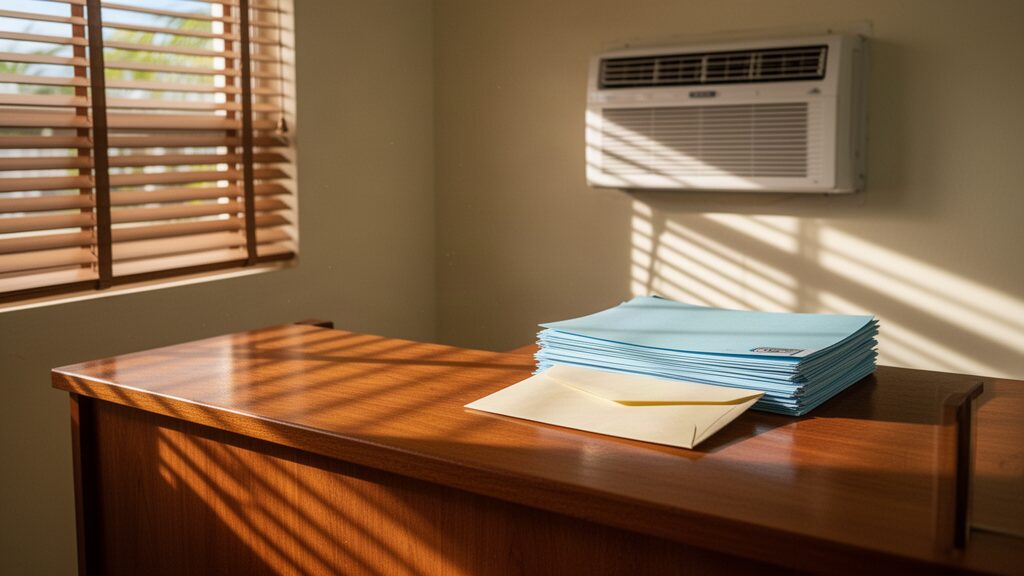
Then came the heat. The consultant’s letter describes a broken air-conditioning unit that left staff and patients uncomfortable. Workers complained and were told to leave the office. Unsure what management meant, she says, they sat in their cars in the car park until the end of the working day. When they returned, management accused them of abandoning their jobs. She also alleges she was deliberately pushed during a confrontation; her consultant calls that an assault and says he advised her to report it to the police.
On September 24 she was called into the manager’s office and handed a dismissal letter. She says it contained allegations nobody had raised with her before, leaving her no chance to answer them.
What The Law Says
The consultant’s argument rests on Section C10 of the Antigua and Barbuda Labour Code, which he says requires an employer to give a precise reason for terminating an employee. He argues the dismissal was procedurally unfair and denied her natural justice. The claim covers loss of protection, vacation pay, notice pay, immediate loss, exemplary damages and costs. The office has been given a deadline to respond or negotiate, failing which the matter goes to the Labour Commissioner as a formal complaint.
Whatever the truth of this particular case, the procedure the law demands is not complicated. Tell a worker what she is accused of. Let her answer. Put the precise reason in writing. If employers find even that too much trouble, the Code is not being enforced.
A Pattern, Or A One-Off?
The consultant says he is seeing more cases like this and compared what he calls a pattern of workplace abuse to a cancer. That is a strong claim from someone with a client to represent, and it needs evidence. The Labour Department is the body that has it. It should publish how many unfair dismissal complaints it receives each year, how long they take to resolve and how often workers win.
Without those figures, every case like this one stays a private quarrel. With them, Antigua would know whether its labour protections work, or whether workers simply have rights on paper and a long wait in practice.