100 Questions Blocked, No Follow-Ups Allowed: Why Trinidad’s Opposition Walked Out on Prime Minister’s Questions
Trinidad’s Opposition boycotted Prime Minister’s Question Time, saying only 30 of 130 questions were approved and follow-ups are barred. The fix has sat with a committee for over a year.
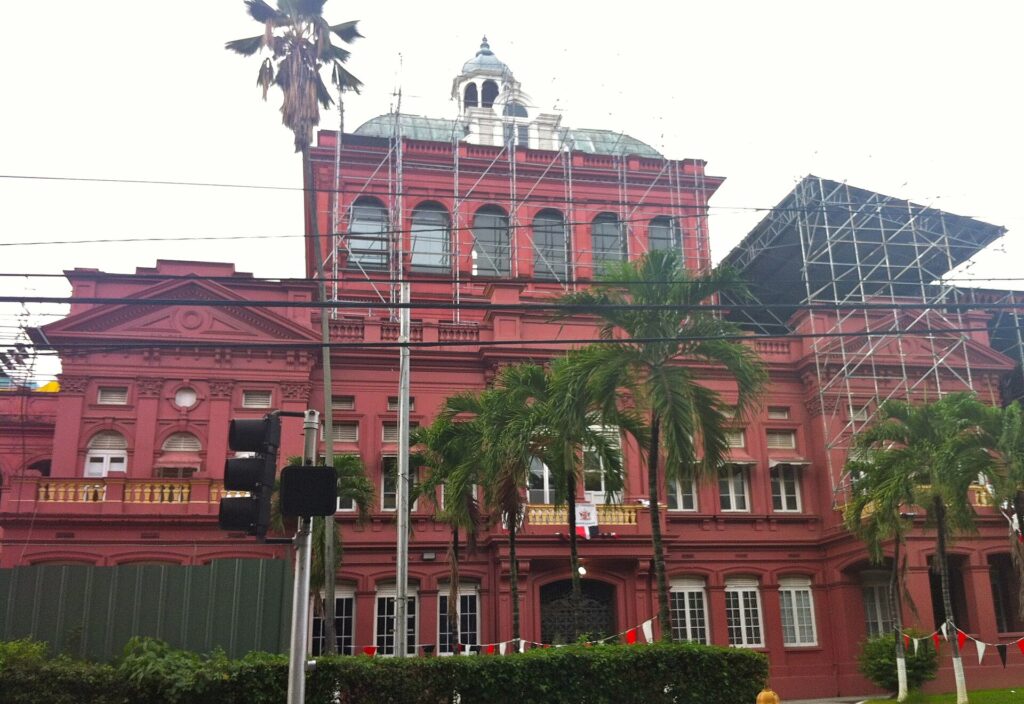
A question time where the questions are filtered and the follow-ups are banned is not scrutiny. It is a recital. That is the charge Trinidad and Tobago’s Opposition levelled on Friday when it refused to show up for Prime Minister’s Question Time, and on the numbers it has put forward, the charge deserves an answer rather than a shrug.
Opposition Chief Whip Marvin Gonzales announced the boycott in a statement, saying the walkout followed repeated warnings that his side would stop taking part unless restrictions on supplementary questions were lifted. He traced the problem to a ruling by the Speaker on September 19, 2025, which he says effectively stopped Opposition MPs from challenging incomplete, evasive or inaccurate replies from Prime Minister Kamla Persad-Bissessar.
The arithmetic of accountability
The figure that should trouble anyone, whatever jersey they wear, is this one. Gonzales says that since the 13th Republican Parliament opened in May 2025 the Opposition has submitted 130 questions to the Prime Minister. Thirty were approved. That is roughly 23 per cent. The other 100, by his account, were rejected, delayed or left unresolved.
Those are the Opposition’s own figures and the Government is entitled to dispute them. But if they stand, they describe a Parliament in which more than three in four questions aimed at the head of government never reach the floor, and the few that do cannot be followed up. A prime minister who can say what she likes and sit down without being pressed is not being questioned. She is being given a microphone.
Gonzales put it bluntly: ‘This Government has increasingly treated PMQs as a political performance rather than a serious exercise in answering to the representatives of the people.’
What the country did not get to hear
The Opposition says it had intended to ask about the Special Operations Zone in Maloney, crime statistics, worsening water restrictions, the fatal boat collision off Chaguaramas and preparations for a potentially severe dry season linked to El Niño. Every one of those is a live public concern. None of them was put to the Prime Minister on Friday.
And here the Opposition has to carry its share. A boycott makes a point once. After that, an empty bench is simply an empty bench, and the people of Maloney or the households on water rations gain nothing from a protest that leaves their questions unasked. Gonzales says his side will keep using other parliamentary mechanisms. It should be held to that, because walking out is the easy part.
A committee that has had a year
The most damning detail is the slowest one. According to Gonzales, the Speaker previously indicated the matter could be settled by the Standing Orders Committee. More than a year after the ruling, nothing has been resolved. The Opposition now wants that committee convened urgently to recommend an amendment to Standing Order 26 that explicitly permits relevant supplementary questions.
That is a modest request. As Gonzales argued, ‘This is not a request for special treatment. It is a demand to restore a parliamentary safeguard that served this country under previous Speakers and Governments.’
A government confident in its record has no reason to fear a follow-up question. If the answers are good, a second question only makes them look better. The refusal to fix a rule that everyone agrees can be fixed by a committee tells its own story. Convene it, amend the order, and let the Prime Minister be asked twice. That is what the job pays for.