Antigua Beach Access Committee: 4,100 Signatures Bought a Committee With No Deadline and No List
Gaston Browne has formed a committee to review beach access and negotiate with landowners after a 4,100-signature petition. There is no timetable and no list of priority sites.
It took more than 4,100 signatures to get the government of Antigua and Barbuda to form a committee on beach access. It will take a timetable, a list of sites and a public report to prove the committee is anything more than a way to let the petition cool.
Prime Minister Gaston Browne announced the committee on Saturday’s Browne and Browne Show. Its job, he said, is to review existing access points and negotiate agreements with landowners where public routes cross private land. Among the standards the government wants: paths wide enough to get an ambulance down to the shoreline.
What was actually promised
Browne said talks were taking place with interests at Mill Reef and named Pearns Point as another area where better access has been discussed. He floated possible public beach parks at sites including Ffryes and Fort James. He did not give a timetable for the committee’s work, and he did not say which beaches would be dealt with first, who sits on the committee, or whether its findings will be published.
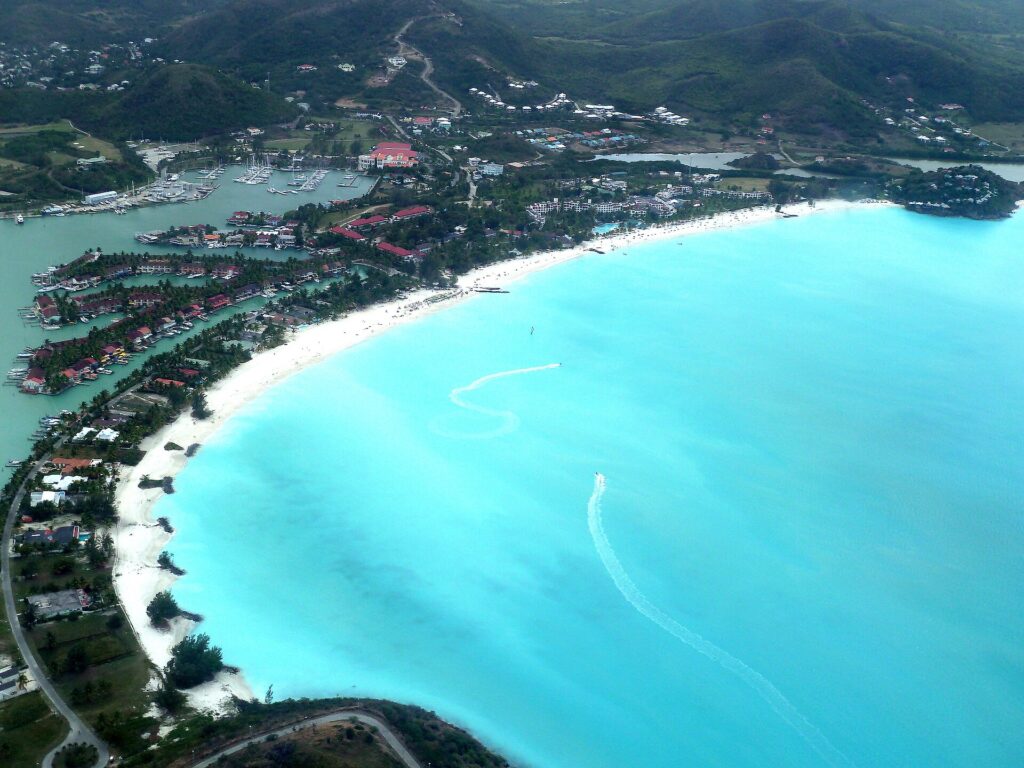
The petition that forced this was organised by Eli Fuller. Its focus was South Beach at Jolly Harbour, but Fuller also called for practical access to beaches right across the country. That word, practical, is the whole argument. A right of access that runs through a locked gate, ends at a car park with no spaces, or narrows to a goat track a pensioner cannot walk is a right on paper only.
The ambulance test is a good one. Apply it everywhere
Credit where it is due: tying access standards to whether an ambulance can reach the sand is a smart, concrete benchmark. It speaks to safety, not just leisure, and it is hard for any developer to argue against in public. Parking, the distance from road to shore and the width of a path decide whether an access point works for families, older people and emergency crews.
But a benchmark is only useful if it is measured. The committee should walk every major beach, score each access point against that ambulance standard, and publish the results. Antiguans would then know exactly where access is blocked, narrowed or quietly disappearing, and which landowners are refusing to deal.
Who holds the cards
The weakness in Browne’s approach is that it rests on “agreements” with private owners. Negotiation favours whoever owns the land and has time on their side. Mill Reef and similar enclaves have every incentive to talk slowly. Government has planning powers and the ability to acquire rights of way; asking nicely should not be the only tool on the table.
The petitioners won a committee. They should now insist on three things: a deadline, a published list of priority beaches, and a report to Parliament. Without them, this committee risks becoming the place where a popular demand goes to wait.