Jagdeo Floats Nuclear Power for Guyana. First, Get the Gas Plant Running and Find the US$5 Billion for the Grid
Vice President Bharrat Jagdeo told manufacturers Guyana may need nuclear power in the coming decades. The country's immediate electricity crisis is a lot closer to home.
Guyana cannot yet keep the lights on reliably, and its vice president is already talking about splitting the atom. Bharrat Jagdeo told the Guyana Manufacturing and Services Association’s 31st annual awards ceremony on Thursday that the country may have to think about nuclear energy in the decades ahead. “What do we substitute with?” he asked.
It is a fair long-term question. It is also a very convenient way to change the subject.
The Baseload Argument
Jagdeo’s case is the standard one. Wind and solar, and in some cases hydro, cannot deliver steady baseload power without batteries, and batteries are expensive. Nuclear and fossil plants can. Today Guyana’s electricity comes mainly from fossil fuels, with a small share from solar and hydro. Around 32 countries run commercial nuclear plants, which produce about nine per cent of the world’s electricity.
The demand numbers explain the anxiety. Guyana Power and Light’s customer base grew from 184,000 in 2019 to 231,000. Jagdeo puts the rise down to higher incomes, more appliances, air conditioning and business growth. Peak demand now stands at 216 megawatts against 255 megawatts of generating capacity. That is a very thin margin for a fast-growing economy.
The Promises Already on the Table
On paper, the cavalry is coming. The Gas to Energy project at Wales on the West Bank Demerara is expected online next year, with phase one adding 300 megawatts and phase two another 300. The Government has paid $4.25 billion as a down payment to Siemens Energy for phase-two turbines. Amaila Falls, with at least 165 megawatts, is at the bid-evaluation and financing stage. About 100 megawatts of solar are planned. By 2030, capacity is meant to reach about 800 megawatts.
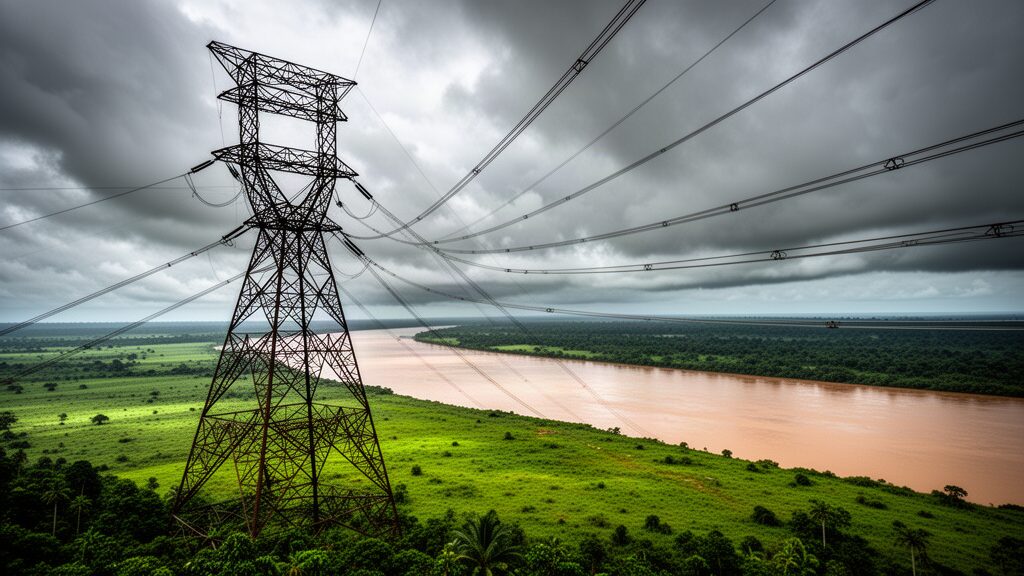
Then there is the wire. Guyana needs nearly US$5 billion to modernise transmission and distribution: about US$2.3 billion for the backbone and about US$2.5 billion for distribution, including new transformers and upgrades to around 1,500 kilometres of network. Contracts worth about $422 million towards the West Bank Demerara and $160 million towards Kurupukari have been awarded. That is a down payment on a mountain.
Nuclear Talk Is Not an Energy Policy
Nobody should dismiss nuclear power out of hand. But it is the most capital-hungry, regulation-heavy and slow-to-build option there is, and it requires a nuclear regulator, a safety culture and a waste plan that Guyana does not yet have. Raising it now, at a dinner, without a study or a timetable, is a headline rather than a decision.
Guyanese businesses at that ceremony did not need a vision for the 2040s. They needed to know when Gas to Energy will actually switch on, when Amaila Falls will be financed, and who is paying for the US$5 billion grid that has to carry all this new power. Get those three right and the country can have a serious debate about nuclear. Get them wrong and the reactor will be the least of Guyana’s worries.