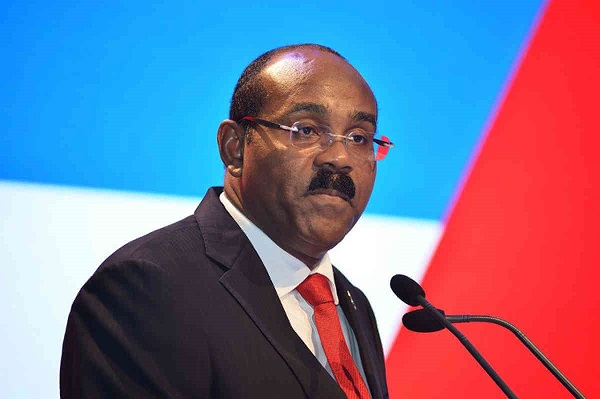
No Christmas Bonus: Gaston Browne Says Antigua Is ‘Fiscally Paralyzed’ After $100 Million in Fuel Subsidies
Gaston Browne says fuel subsidies above $100 million this year leave no room for a public-sector Christmas bonus. The budget on 11 December should show the arithmetic.
Antigua and Barbuda’s public servants asked for a Christmas bonus and got a fuel bill instead. Prime Minister Gaston Browne told listeners of his own radio programme on Saturday that the money that might have paid for a bonus has gone on subsidising petroleum, “not only at the pump, but also fuel for electricity”, at a cost he put at “over a hundred million dollars” this year, about 1.5 per cent of GDP.
“I know it’s tough for people, but we’re just fiscally paralyzed in terms of providing any further relief,” he said.
A paralysis with a convenient timetable
The answer was delivered on the Browne and Browne Show in reply to a listener’s question, not in Parliament, not in a written statement and not with a single table of figures. That matters. The Throne Speech is due on 4 December and the 2027 budget on 11 December. A government that is genuinely out of room can show the arithmetic in a fortnight. Until it does, “over a hundred million” is a talking point, not an account.
Browne admitted that public servants have a case for a pay increase, then said his administration was “kind of powerless now to give any firm commitment”. Powerless is a strange word from a head of government who controls the budget, sets the subsidy policy and decides how much of the fuel shock to pass on. Governments are never powerless; they choose. This one chose to keep fuel and electricity prices down rather than pay a seasonal bonus. That may even be the right call. It should be defended as a choice, not presented as fate.
Who is actually paying
By Browne’s own account, the government first absorbed rises in petroleum costs and then passed some of them on, which he linked to higher electricity bills. So households are already paying part of the fuel shock through their light bills, and public servants are now paying again through a missing bonus. He also pointed to an expanded basket of goods eligible for tax relief, but did not say what that costs or what it saves a typical family.
The people best placed to absorb pain are not the ones being asked to. A fuel subsidy delivered at the pump helps whoever burns the most fuel, and that is not the clerk in a government ministry. If the treasury is truly paralysed, the budget on 11 December should show which large spending lines, concessions and capital projects were looked at and spared before public workers were told to tighten their belts.
The unions should be asking for exactly that. A one-line answer on a talk show is not a wage policy, and “we’re paralysed” is not a plan. Public servants deserve to see the numbers before they are told, once again, to wait.