Thieves Strip a WASA Station and South Trinidad Goes Dry. The Minister Calls It a ‘Continued Pattern’
Vandals stripped cables from WASA’s Tabaquite Booster Station, cutting water to thousands in South Trinidad. Minister Barry Padarath calls it a continued pattern. So why was the station unguarded?
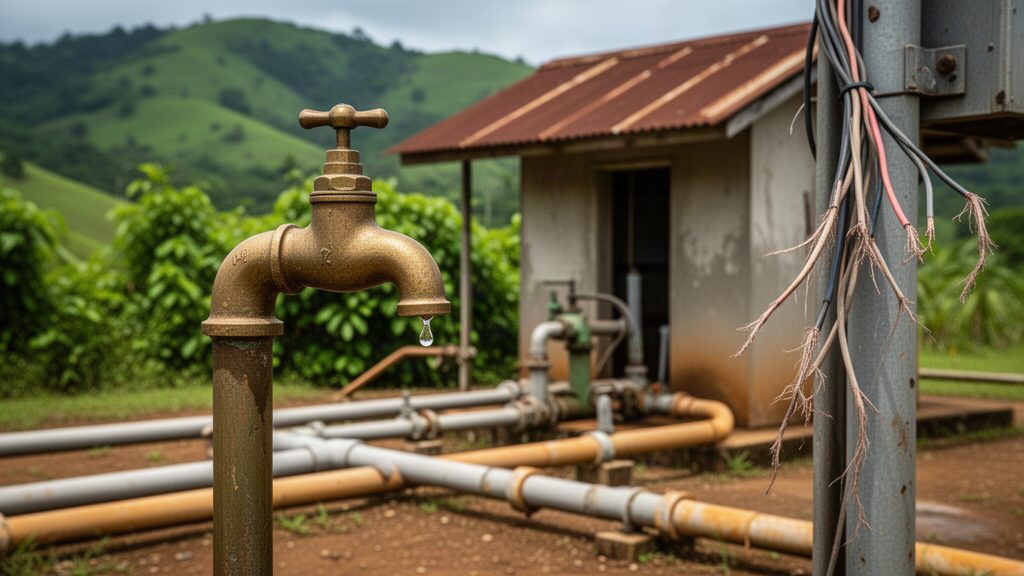
A few lengths of electrical cable were enough to cut off water to thousands of people in South Trinidad this week. Vandals hit the Water and Sewerage Authority’s Tabaquite Booster Station early on Wednesday, removing critical cables and other equipment and leaving the facility unable to operate. The damage was discovered at about 6.48 a.m.
Public Utilities Minister Barry Padarath confirmed the scale. ‘Thousands of people were impacted. I am told that the plant is expected to be back up in the next day or two and obviously it’s a tremendous concern for us because this is a continued pattern,’ he said.
How far the damage spread
One station failing dragged others down with it. WASA said supplies were disrupted in Tabaquite, including its side streets, Stone Road and Guaracara End Point. The operating schedule of the Alleyne Road Booster Station was affected, interrupting supply to Alleyne Road, Brasso Venado and Los Attojos. Slower refilling of the Guaracara Reservoir hit Farnum Village and Guaracara High Point. Communities along Tabaquite Road, which links Chaguanas to Rio Claro, were also without pipe-borne water.
The Trinidad and Tobago Electricity Commission was called in and safely disconnected power to the damaged site, and teams from both utilities were assessing and repairing the electrical infrastructure. WASA’s own statement gave no firm time for restoration, promising only to restore regular supply ‘in the shortest possible timeframe’. It apologised to customers, said it was working with the police, and reminded the public that anyone convicted of wilfully or maliciously damaging public infrastructure faces fines and imprisonment.
‘A continued pattern’ is an admission
Read the minister’s phrase again. A continued pattern means this has happened before, more than once, and that the authority knew it could happen again. So the question is not who would do such a thing. The question is why a station that thousands of households depend on could be entered and stripped without anyone knowing until morning.
Padarath’s answer was this: ‘I’m advised by WASA that they have increased security and yes they have started some camera system works at some of these facilities. So that is ongoing.’ Started. Some. Ongoing. Those are not the words of an organisation that has secured its critical sites. They are the words of one that is getting round to it.
The people who took the cable deserve to be caught and prosecuted, and nobody should pretend otherwise. But cable theft is a predictable crime with a predictable target, and a utility that leaves pumping stations dark and unwatched is supplying the opportunity. A hotline number, which WASA offered, puts the job of guarding its assets on to the neighbours.
Rationing on top of rationing
All this lands on customers who were already on restrictions. Padarath acknowledged that WASA’s existing water schedules posed challenges and that piling vandalism on top was unfortunate. He said the country is in a precarious position as it deals with the long-term effects of El Niño, and defended the restrictions against Opposition questions about why they remain when dams have water. ‘We are going into the dry season between January to June,’ he said, warning that weather patterns into 2027 are expected to stay very harsh.
That may be sound management. It also raises the stakes. If every drop has to be rationed for a hard dry season, then every station knocked out by thieves costs more than it did last year. The minister says his team ‘will continue to look for effective ways’ to tackle vandalism. South Trinidad has heard that. What it would like to hear is a date by which every booster station has lights, cameras that work, and someone watching the screen.