Robotic Surgery Arrives in Jamaica at a Private Hospital. The Public System Should Be Embarrassed It Wasn’t First
Andrews Memorial Hospital has carried out Jamaica's first reported robot-assisted cancer operations. It is a real milestone, and a pointed reminder of how far the public hospitals lag behind.
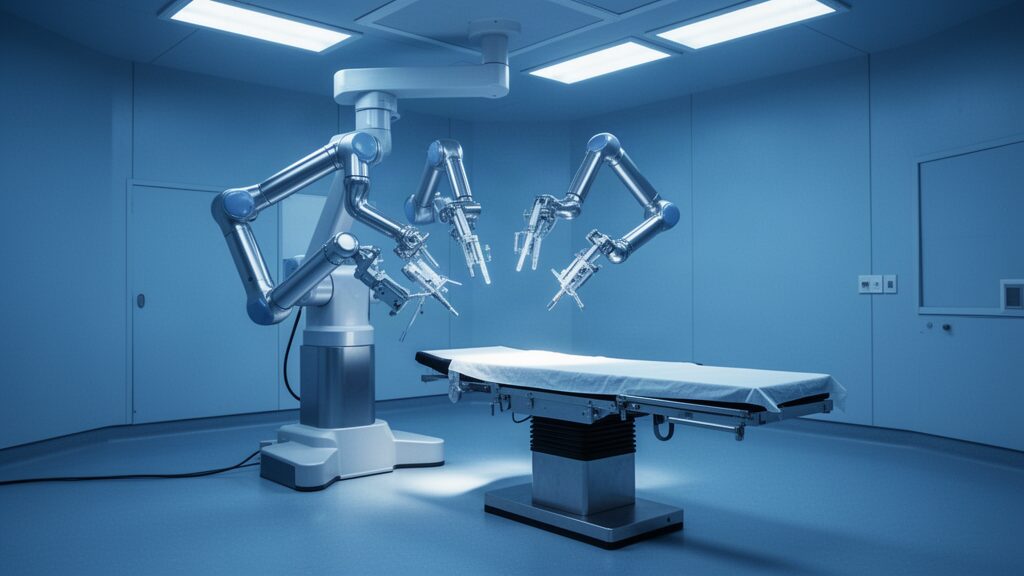
Jamaica has finally put a surgical robot to work, and it took a private Seventh-day Adventist hospital in St Andrew, not the state, to do it. Between 15 and 19 November, a urology team at Andrews Memorial Hospital led by Dr Roy McGregor carried out five robot-assisted laparoscopic operations using a four-arm da Vinci Si system, the first reported use of the machine on the island.
Four of the patients had radical prostatectomies for prostate cancer. The fifth had a cancerous kidney removed. One of the first, himself a practising clinician, was reportedly walking the corridors the day after his operation, clocking around 15 laps. That is exactly the point of this technology: smaller incisions, less blood loss, less pain and a faster route home.
A Milestone Built on One Surgeon’s Persistence
This did not happen by accident. McGregor introduced laparoscopic prostate cancer surgery at Cornwall Regional Hospital in 2011 and says he has done more than 200 of those cases since. He has logged more than 100 hours of robotic console training in Europe. The inaugural team drew in a London-based robotic surgeon, Dr Torath Ameen, a robotics nurse specialist, and doctors borrowed from Cornwall Regional and Spanish Town Hospital.
“We can deliver the standard of care that is received by people in Europe and America here in Jamaica,” McGregor said. He was also careful to puncture the science-fiction version of events: “The robot doesn’t do the surgery.” The surgeon controls every movement of the arms at all times.
Prostate cancer is one of the deadliest diseases facing Jamaican men. Anything that makes curative surgery gentler and recovery quicker deserves applause, and McGregor’s team has earned it.
Who Actually Gets to Use It?
Now for the uncomfortable part. The hospital’s chief executive, Donmayne Gyles, talks of advanced, “accessible” care for Jamaicans and patients across the region, and of cutting the need to fly abroad for specialist treatment. McGregor talks up medical tourism. Neither has said what a robot-assisted prostatectomy will cost a patient, whether insurers will pay for it, or whether any public patient will ever be referred to the machine.
That silence matters. The Jamaican men most likely to be diagnosed late with prostate cancer are not the ones who can write a cheque to a private hospital in St Andrew. If the robot becomes a premium product for the insured and for visiting foreigners, it will widen the gap between two health systems on one small island rather than close it.
It is also striking that the public specialists who staffed this programme came from Cornwall Regional and Spanish Town. The state is training and employing the talent, and the private sector is housing the equipment. The Ministry of Health should be asking how that arrangement can be turned around so that public hospitals get access too, through shared lists, a partnership or a machine of their own.
The Test Ahead
McGregor wants to extend the technology to general and gynaecological surgery. Good. The real measure of this “historic advancement” will not be the photographs of the first week. It will be how many ordinary Jamaican patients are on the operating table a year from now, and what they paid to get there. Andrews Memorial has made the leap. The rest of the system now has to explain why it is still standing on the other side.