Samuda Calls the 1% Beach Access Claim ‘A Lie From the Pit of Hell’. His Own Numbers Show Jamaicans Still Have Little to Celebrate
Matthew Samuda told JLP delegates that the claim that less than one per cent of Jamaica's coast is freely accessible is a lie. His own figures and admissions tell a more complicated story.
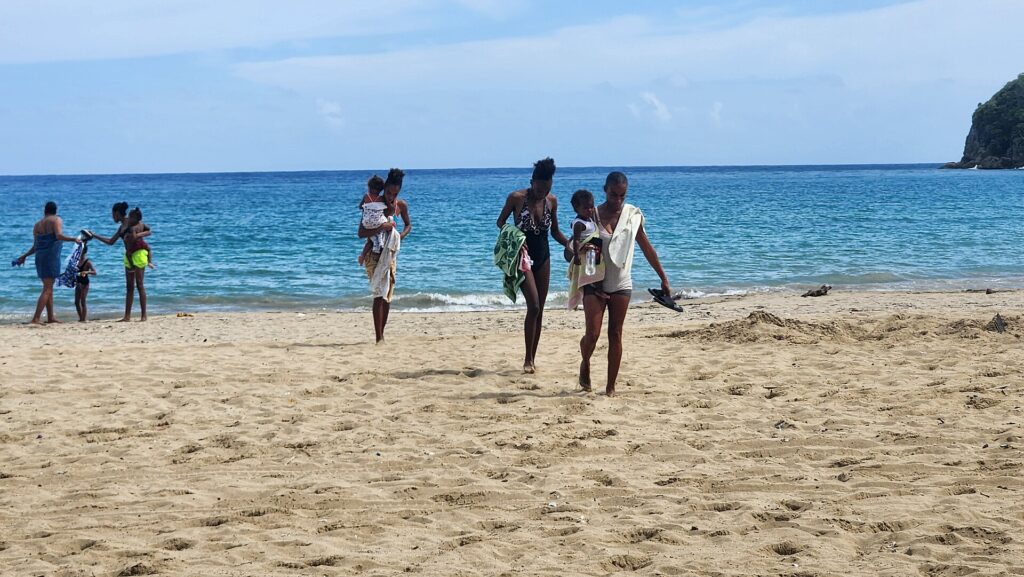
Matthew Samuda went to a party conference and picked a fight with a statistic. The minister of water, environment and climate change told Jamaica Labour Party delegates in Montego Bay that the claim, repeated by campaigners and by the BBC, that less than one per cent of Jamaica’s coastline is freely open to the public is “a lie from the pit of hell”.
Strong words. The trouble is that the minister’s own numbers, and his own admissions, do the campaigners’ work for them.
The Government’s Arithmetic
Samuda’s figures run like this. Jamaica has about 1,022 kilometres of coastline. Roughly 71 per cent is rock, cliff and other formations, and about 29 per cent is beach. Around nine per cent of the total is operated commercially, by hotels, paid entrances, bars or restaurants. That, he said, leaves about 20 per cent “publicly accessible”.
The Jamaica Beach Birthright Environmental Movement, quoted by the BBC in January, puts the figure that is public and freely accessible at 0.6 per cent. The two sides are not measuring the same thing. Samuda counts shoreline that is legally public. The campaigners count shoreline that an ordinary family can actually reach and use for free.
And here is the minister’s remarkable concession. Classifying a beach as public, he said, “does not automatically mean that Jamaicans have meaningful access to it”. If there is no proper road, no parking, no bathroom, no lifeguard and no security, “then we have not delivered the standard of access our people deserve”. That is not a rebuttal of the one per cent claim. It is a description of why people believe it.
A 1956 Law and a Promise Per Parish
Samuda is right that the legal framework is ancient. The Beach Control Act dates from 1956 and was last amended in 1973. Successive governments promised reform and delivered nothing until Prime Minister Andrew Holness tabled a Beach Access and Management Policy in Parliament in March this year. Policy is not law, though, and the minister offered no date for new legislation.
What he did offer was a list of projects. Harmony Beach Park in Montego Bay cost about $1.5 billion. Success Beach Park in St James and an upgrade of Priory Beach in St Ann are planned investments of more than $1 billion between them. Design work is advancing on Pagee Beach in St Mary, and a Negril Public Beach Park is meant to bring in craft vendors, entertainment and fisherfolk. The Government has committed to at least one high-quality free public beach park in every parish.
That is a worthwhile promise. It is also a quiet admission that, after decades of hotel construction, Jamaicans need the state to build them a way back to their own sea.
Insults Are Not Policy
Calling critics liars from a party platform may play well with delegates. It does nothing for the family in St Mary or Westmoreland who drive past gates and walls looking for somewhere to swim. The minister says development and access “can coexist”. Fine. Then publish the parish-by-parish timetable, put the new beach law before Parliament, and let the public judge whether the one per cent figure was a lie or a warning. Until then, the loudest number in this row is not 20 per cent. It is 1956.