More Than 90,000 Cubans Wait for Surgery as Blackouts Stop Dialysis Machines Mid-Cycle
President Miguel Díaz-Canel says more than 90,000 Cubans are waiting for surgery and 34,000 pregnant women are missing care, as blackouts and shortages cripple hospitals.
Cuba’s president has admitted that more than 90,000 people are waiting for surgery. That figure, from the country’s own leader, should end any pretence that the island’s famous health system is coping.
Miguel Díaz-Canel disclosed the backlog in early November at the close of a Communist Party review of the Ministry of Public Health and several medical facilities. He said tens of thousands of patients were also struggling to get chemotherapy, radiotherapy or dialysis, and that more than 34,000 pregnant women were missing some of the treatment or medical checks they needed.
Inside One Hospital
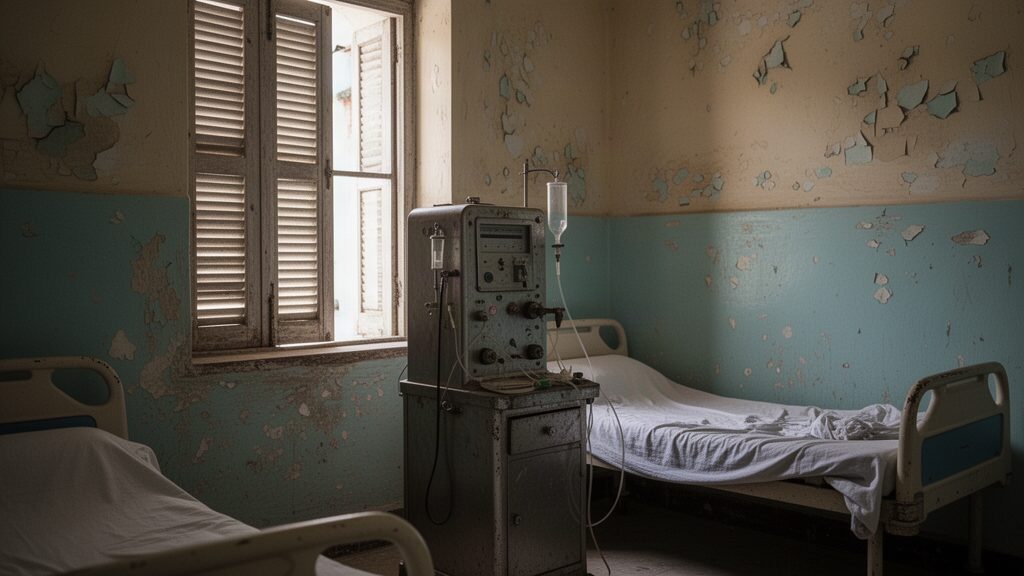
The details from Havana’s National Institute of Nephrology are grim. According to international reporting in mid-November, only 19 dialysis machines there were working, kept going by technicians salvaging parts. When blackouts caused equipment failures and backup batteries could not complete a cycle, the head of the service said, nurses had to return patients’ blood from the dialysis circuit by hand.
The same institute had performed no kidney transplants in 2026 as of November 17, because it lacked the medicines and supplies. Its post-transplant recovery unit sat dark, with boxes stored inside.
Health Minister José Ángel Portal Miranda said hospitals and clinics remained open, though some services were working at reduced capacity. That is technically true and practically meaningless to a patient whose operation cannot happen because the theatre has no power.
The Children in the Queue
In August, Díaz-Canel had put the surgical backlog at 98,500 patients, including about 12,000 children. He said then that Cuba had the expertise to perform the operations but lacked the resources and electricity to keep operating rooms running. His November remarks gave a slightly lower national total but no updated count for children.
That omission matters. A government willing to publish the headline number should publish the breakdown too, especially for children. A falling total could mean operations done, or it could mean people dropping off the list for other reasons. Without detail, nobody outside the ministry can tell.
Honesty Is a Start, Not a Solution
There is something to be said for a leader naming the scale of the crisis rather than hiding it. But Díaz-Canel’s own words point to the core failure: the doctors exist, the skill exists, and the system cannot supply the electricity and materials to let them work. Power cuts are not only an inconvenience in Cuba; they are now a clinical risk, as the dialysis ward shows.
The Caribbean has long admired Cuba’s medical training and has relied on its doctors. That relationship gives the region every reason to watch closely and to ask what help could be offered. For the 90,000 waiting, and the 34,000 expectant mothers missing care, an admission is not treatment. Working machines and a reliable power supply would be.