Special Operations Act: Jeremie Calls in Three More London Barristers to Defend the Maloney Curfew, and Still Won’t Show the Evidence
AG John Jeremie has made three more British barristers eligible to defend the Special Operations Act and the Maloney curfew, alongside Lord Pannick, while refusing to disclose the evidence or their fees.
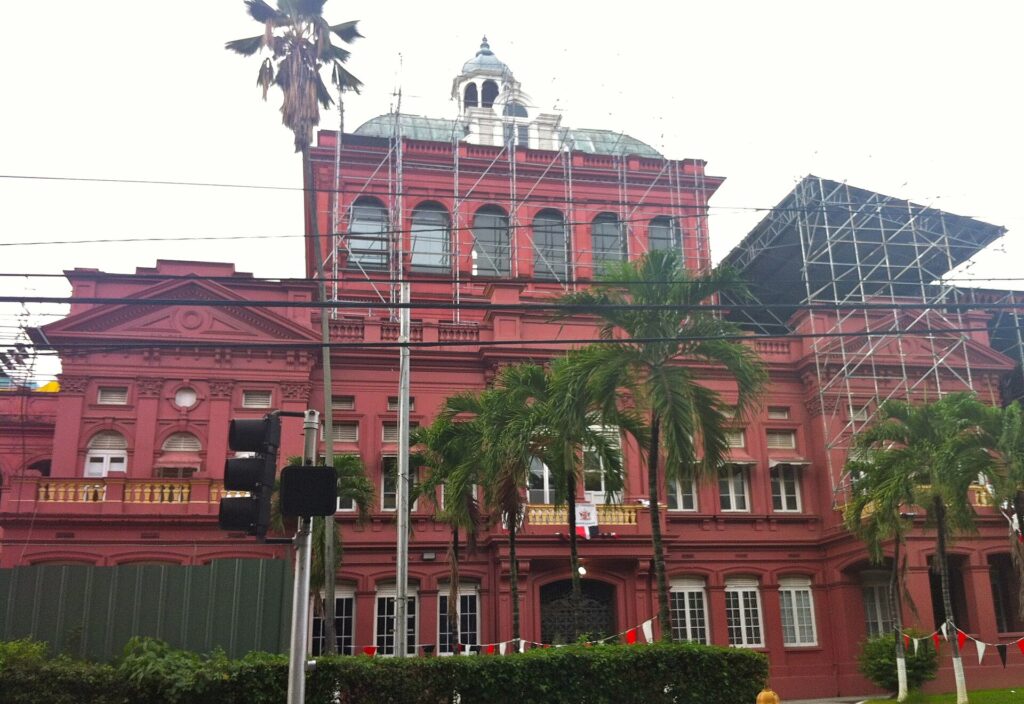
The Special Operations Act was sold as a tool to restore order in Maloney. Two weeks on, it has become a full-employment scheme for the London Bar. Attorney General John Jeremie has authorised three more British barristers to defend the law and the Maloney curfew in court, joining Lord David Pannick KC, whose reported rate of about £5,000 an hour, roughly TT$44,650, has already caused a storm. The Government is spending heavily to defend restrictions it will not explain.
What we know so far
Legal Notices 857, 858 and 859 of 2026, signed by Jeremie on November 20 under Section 15A of the Legal Profession Act after consultation with the Chief Justice and published in Friday’s Gazette, make Sir James Eadie KC, Robert Stephen Strang and Thomas David Henry Mountford eligible to practise in Trinidad and Tobago for the named proceedings only. Eadie, called to the Bar in 1984 and a KC since 2008, and Strang will act against the Opposition Leader’s challenge to the Special Operations Act, the closed-area and curfew orders, and the designation of the Maloney Buildings Housing Development in Policing District 2. Mountford joins Pannick in defending the separate constitutional case filed on November 16 by activist Wendell Eversley, who is represented by former prime minister and Opposition MP Stuart Young SC. The Gazette notices disclose no fees for the new lawyers.
Maloney was declared a closed area on November 10, with a nightly curfew from 9pm to 5am. The Opposition argues the Act passed by a simple majority without the special procedure needed for laws that limit constitutional rights, and wants five of its sections declared unconstitutional and the orders quashed.
A refusal dressed as principle
In a letter dated Friday, Jeremie declined to give the assurances the Opposition sought, including clearer rules on movement permits for residents leaving home for work, medical emergencies or essential errands. Those are operational matters for the Commissioner of Police and the Head of Special Operations, he said; Cabinet and the Attorney General cannot direct the police. He added that the security services had briefed the National Security Council with intelligence on violent lawlessness in Maloney, enough to satisfy Cabinet and the President that the legal conditions were met.
That is a convenient two-step. The Government made the law and signed the orders, but when residents ask how they get to work after dark, it is suddenly nothing to do with the Government. And the justification is intelligence nobody outside the National Security Council may see. The Opposition has now asked for the material put to Cabinet and Parliament, sent a pre-action letter to Commissioner Allister Guevarro, whom it plans to add as a defendant, and asked that permit applications, operational logs and body-camera footage be preserved.
Who pays, and who answers
‘The State is not a party here to elective litigation,’ Jeremie said. ‘If a claim is filed against the State it will be defended.’ Fair enough. But no rule requires the defence to be imported, and he has also said he expects the cases ‘will ultimately land in London’. That is an admission that the Government expects a long, expensive fight up to the Privy Council, paid for by taxpayers, while the residents of Maloney live under curfew in the meantime.
If the evidence for the curfew is strong, the cheapest defence is to disclose what can safely be disclosed and let a local court weigh it. If the permit system is fair, publish it. Instead the country is getting secrecy at home and four foreign barristers on the bill, with the fees of three of them undisclosed. The Attorney General should tell Parliament what this legal team is costing. Maloney deserves to know what it is being protected from, and taxpayers deserve to know what they are paying to keep it quiet.