Wave Power Off Argyle ‘Within Five Years’: St Clair Leacock Revives a 2 Megawatt Idea That Still Has No Test Results and No Price Tag
Deputy Prime Minister St Clair Leacock hopes St Vincent can generate electricity from waves off Argyle within five years, reviving a two megawatt pilot first agreed in 2025.
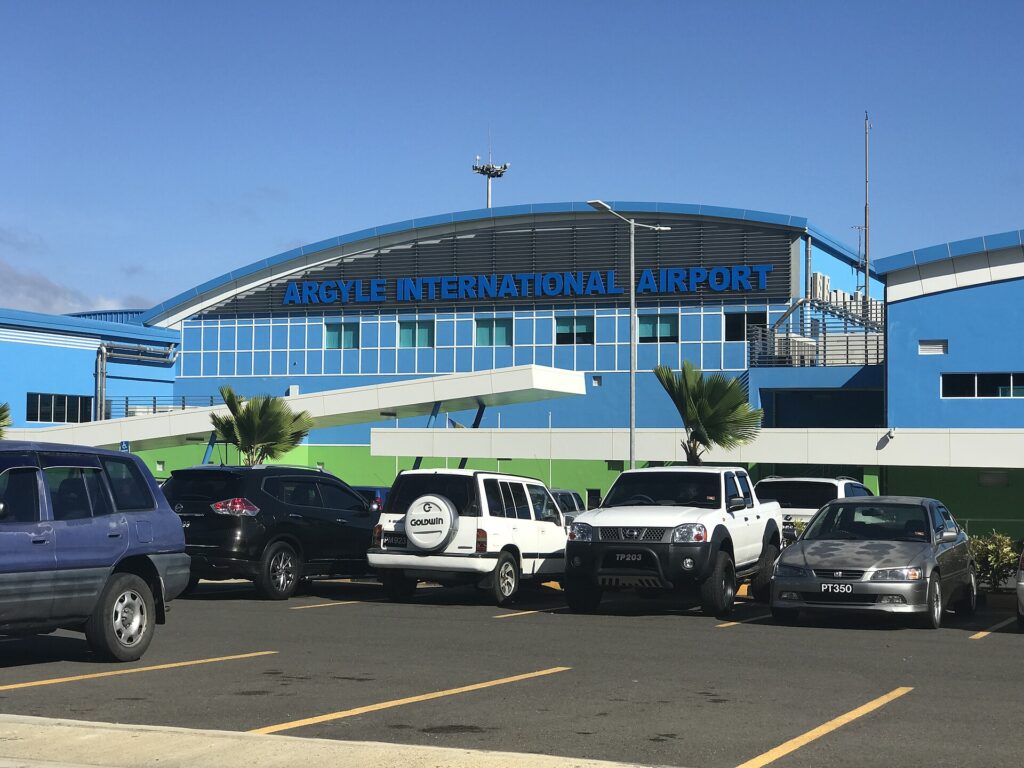
St Vincent and the Grenadines’ electricity bills are among the burdens Vincentians complain about most, and the new government has reached for an old idea to ease them: electricity from the waves off Argyle. Deputy Prime Minister and National Security Minister St Clair Leacock says he hopes the country could be generating wave power within five years.
What Leacock Said
Speaking on November 17 at the opening of a regional workshop on national artificial intelligence agendas at the Beachcombers Hotel, Leacock said the government wants to set up platforms to test how much energy can be harnessed. ‘We believe we can run the tests and see how much energy we can generate and bring down the cost of fossil fuel,’ he said, adding that anything that cuts energy costs has an immediate effect on people’s lives.
An Inherited Project
This is not a new plan. In March 2025, then Prime Minister Ralph Gonsalves announced a memorandum of understanding signed in New York for a Wave Power Pilot Project involving St Vincent and the Grenadines, SIDS DOCK and an Irish-incorporated energy group. The project, the Wave Power Park, was proposed for the north-eastern coast with an initial capacity of about two megawatts. A later SIDS DOCK report listed the country among those with signed wave-park agreements, starting at two megawatts with potential to grow to ten.
Separately, the Caribbean Centre for Renewable Energy and Energy Efficiency is running a regional wave-energy feasibility assessment that includes St Vincent, looking at ocean conditions, technology, installation costs, grid connection and investment viability. That assessment notes that commercial feasibility in the Caribbean has not yet been established.
Ambition Versus Evidence
Credit to the NDP for not scrapping a renewable project simply because its predecessor signed it. That kind of continuity is rare and welcome. Wave energy, in principle, suits a small island that imports almost all its fuel and is surrounded by moving water.
But Vincentians should keep expectations in proportion. Two megawatts is a pilot, a small fraction of national demand. Testing has not started. There is no published cost, no named developer chosen under the new government, no grid study and no estimate of what the power would cost per kilowatt-hour compared with diesel or solar. Wave technology worldwide has a long history of promising pilots that never reached commercial scale.
Leacock’s five-year window is a hope, as he himself framed it. If the government is serious, it should publish what the 2025 memorandum commits the country to, who pays for the testing platforms, and when the feasibility results will be released. Meanwhile, proven, cheaper options like rooftop solar and battery storage should not wait for the waves to prove themselves.