Jamaica’s ‘Durable’ Polymer Notes Are Tearing, and the Vendors Are Paying for the Bank of Jamaica’s Promise
Market vendors and taxi workers say Jamaica's polymer $50, $100 and $500 notes tear and become worthless. The central bank admits about 22 per cent come back unfit, then declines to comment.
Jamaica’s polymer banknotes were sold as tougher, longer-lasting and cheaper to keep in circulation. Ask a market vendor at Coronation Market or a taxi loader in Half-Way-Tree and you hear a different verdict: the small notes split, fade and end up in a drawer, worth nothing. The people who handle the most cash are the ones quietly absorbing the loss, and the Bank of Jamaica has so far declined to explain itself to them.
What vendors and drivers are saying
The polymer series came in during 2023, replacing the cotton-based $50, $100, $500, $1,000 and $5,000 notes and adding a new $2,000 note. The then finance minister, Dr Nigel Clarke, said at the time that the new material would last longer and cut the frequency of replacement, easing the central bank’s bill of about $1.4 billion a year for printing money.
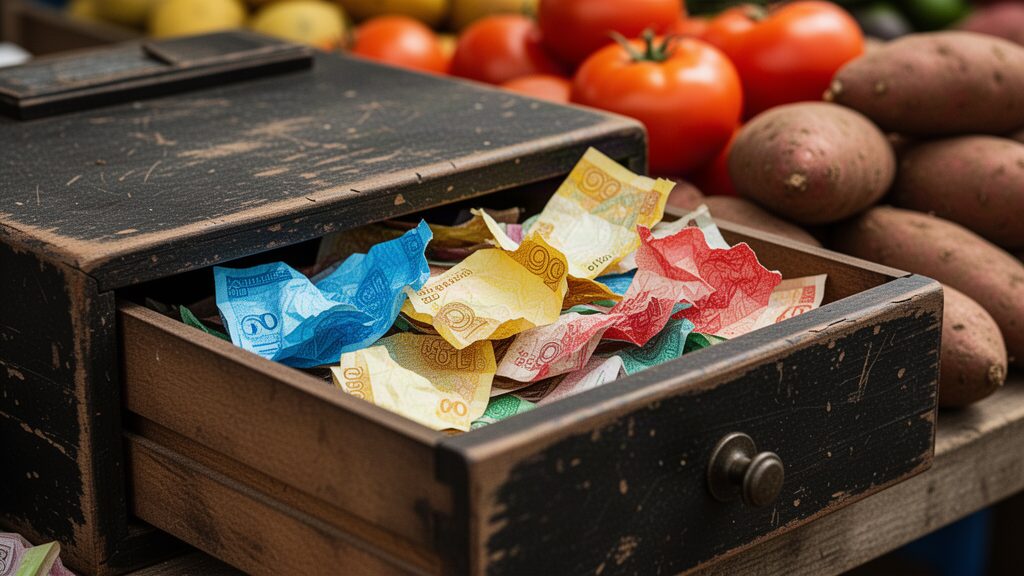
On the street, that promise is wearing thin. One long-time Coronation Market vendor said she had about $5,000 in damaged $50 and $100 notes thrown in her drawer. A taxi loader on the Price Rite to Whitehall route showed notes with micro-tears along the edges and said once a tear starts, the note rips right through. A cab driver flicked through a wad of torn bills, mostly small denominations. More than half of the vendors and customers spoken to said they had damaged notes collecting dust at home.
Worse, one vendor said a bank refused to exchange her torn notes and told her to go and find the missing piece. Under the old cotton notes, she said, a visible serial number was enough. She has since thrown hers away.
The bank’s own numbers
The BOJ declined to comment on the complaints. It did concede that the $50, $100 and $500 notes are coming back damaged more often than the higher denominations, and that roughly 22 per cent of the notes it processes in those denominations are unfit to go back into circulation. In June, the bank said the new notes last up to three years against 1.5 years for cotton, blamed rough handling such as stapling and graffiti, and said it was working with the manufacturer to improve durability, especially for the lower denominations.
De La Rue, the British firm that makes the notes, said it could not judge damage without knowing a note’s history. Reporters who tried to tear a $100 note found it only bent and wrinkled. That is the puzzle: notes that resist a deliberate tear somehow shred in daily use.
Who pays for this
Whatever the cause, the cost is landing on the wrong people. A salaried worker paid by bank transfer barely touches a $50 note. A higgler, a conductor or a cab driver handles hundreds a day, takes whatever the customer hands over, and is left holding the note nobody else will accept. If banks are refusing to exchange damaged polymer notes that still show a serial number, the poorest cash handlers are effectively being fined for a product defect or a design weakness they did not choose.
The BOJ cannot hide behind a 22 per cent statistic and a line about stapling. It should say clearly, and publicly, what any Jamaican can do with a torn note, which banks must accept them and on what terms. It should publish the durability data it is relying on, and set a date for whatever improvement it is negotiating with the printer.
A currency is a promise from the state. When the promise splits along the edge after a few months in a vendor’s apron, the least the central bank owes the public is an answer, not a refusal to comment.