Eco Atlantic Buys Its Way Into the Canje Block. The Licence Expired in March, and Guyana Still Holds the Cards
Eco Atlantic has completed its JHI takeover and expects a 30% stake in Guyana's Canje Block, even though the licence expired in March. The government should price any renewal at today's value.

A Canadian oil explorer has just bought a bigger stake in a Guyanese oil block whose licence ran out eight months ago. That tells you everything about where the power in Guyana’s oil patch now sits: not with the companies, but with the government that decides whether expired licences come back to life.
Eco (Atlantic) Oil & Gas announced on 17 November that it had completed its takeover of JHI Associates Inc., buying the shares it did not already own by issuing new Eco stock. The deal gives Eco a 17.5 per cent legacy working interest in the Canje Block, which it expects to rise to 30 per cent once a new production sharing agreement is finalised.
A Stake in a Block With No Live Licence
The Canje licence expired on 4 March 2026. Eco says the block is the subject of ongoing talks with the government over an extension or the award of a new licence. Crucially, the company had already disclosed that its JHI purchase was not conditional on either outcome. It has bought the position first and will negotiate the paper afterwards.
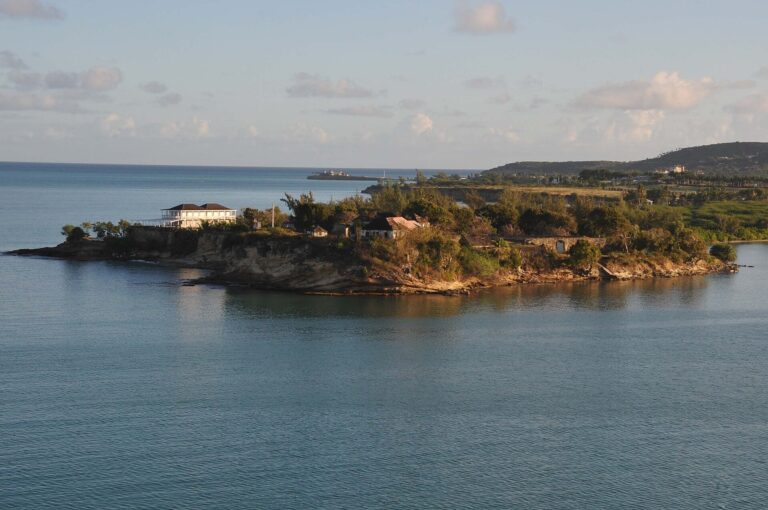
Canje is a serious piece of acreage: 4,800 square kilometres in deep and ultra-deep water, 180 kilometres offshore, directly north-east of the Stabroek Block operated by ExxonMobil’s Guyana subsidiary. Being next door to the most productive offshore discovery in the region is the whole selling point.
Eco’s other Guyanese asset tells a similar story. It holds 100 per cent of the shallow-water Orinduik Block, where two heavy-oil discoveries, Jethro-1 and Joe-1, were made in 2019. That licence expired on 14 January 2026, and Natural Resources Minister Vickram Bharrat has said Eco must apply for a new one under the new production sharing agreement.
The Government’s Leverage, and Its Duty
This is exactly the moment Guyana has said it wants. Under the old arrangements, the country signed contracts that critics have spent years arguing gave away too much. Now two blocks held by the same company have lapsed, and the company must come back to the table under new terms.
The government should use that leverage properly. Any new Canje or Orinduik agreement should be published in full, with the fiscal terms, work commitments and deadlines visible to the public before signature, not after. If a company cannot meet minimum work obligations, the licence should go back out to open bidding.
Who Gains From the Deal
For Eco’s shareholders, the logic is simple: buy cheaply while the licence is in limbo, and gain sharply if the government renews it on good terms. For Guyana, the question is whether it treats a renewal as a favour to a company already in the block or as a fresh national asset to be priced at today’s value.
Guyana knows far more now about what lies under its waters than it did when Canje was first licensed. The terms it signs next should reflect that. A company that bought in without a live licence has taken the risk on itself. The state should not take it back on the company’s behalf.