Two Dredges Destroyed, 11 Detained in Region Nine: Guyana’s Illegal Mining Crackdown Is Busy. Is It Winning?
Guyana's Natural Resources Ministry destroyed two dredges and detained 11 people in Region Nine. It claims 200 mining convictions this year but has not said who was convicted.
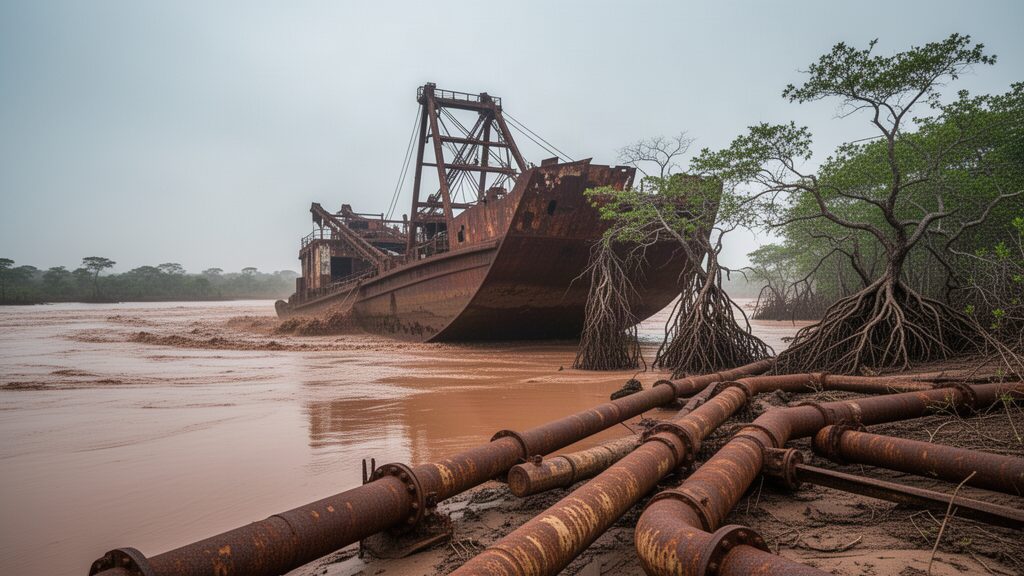
Guyana’s government wants you to see the smashed dredges. The Natural Resources Ministry said on Friday it had dismantled an illegal mining operation in Region Nine, Upper Takutu-Upper Essequibo, destroying two dredges and detaining 11 people, who remain in custody while investigations continue. It is the latest show of force in a zero-tolerance campaign announced in January. The question worth asking is whether a year of raids has changed the economics of illegal gold at all.
The Legal Hammer
The ministry is leaning harder on the law than before. It says it has won three court orders for the forfeiture and condemnation of seized equipment under Sections 100(1), 102 and 106 of the Mining Act, Chapter 65:01. Those orders let the State take permanent ownership of machinery and sell it at public auction. Equipment belonging to repeat offenders, and in other specified circumstances, can simply be destroyed.
That is the right pressure point. A dredge is the single most expensive item in an illegal operation. Taking it away, permanently, hurts the financiers behind the crews far more than a night in a lock-up hurts the labourers who operate the pumps.
Two Hundred Convictions, Who Was Convicted?
Between January and October 2026, the ministry says, it secured more than 200 convictions for mining-related offences. Several non-nationals involved in illegal mining have been deported and blacklisted, and others are waiting for immigration processes to finish. The ministry works with the Guyana Geology and Mines Commission and the Guyana Police Force to close unauthorised operations, seize minerals and prosecute.
Two hundred convictions sounds impressive until you ask who they were. If the list is dominated by workers on the dredges, the campaign is punishing the bottom of the chain while the people who own the machines, finance the fuel and buy the gold stay comfortably out of reach. The ministry’s statement named no one and gave no breakdown. It should publish one: how many owners, how many financiers, how many buyers, how many labourers, and how many of the 200 were fines rather than prison terms.
Follow The Gold, Not Just The Dredge
The ministry urged miners to sell only to the Guyana Gold Board or licensed dealers. That advice exposes the real battlefield. Illegal gold has to be laundered into the legal system or smuggled out, and that requires buyers, transport and, often, paperwork that looks official. Earlier this week, investigators uncovered a suspected illegal gold refinery inside a building in Georgetown itself. The dredges in Region Nine and a refinery in the capital are two ends of the same pipeline.
Region Nine sits on the Brazilian border, where people and equipment cross with ease. Enforcement there will always be a chase. The government should keep destroying dredges, but it should also put as much effort into tracing who paid for them and who bought what they dug. Zero tolerance at the riverbank means little if there is quiet tolerance at the counting table.