Barbados Wants Your Electric Car to Prop Up the Grid. One Megawatt Is a Timid Start for a Grid Near Its Limit
Barbados will test a one-megawatt vehicle-to-grid and virtual power plant pilot. Private car owners must wait up to two years to take part.
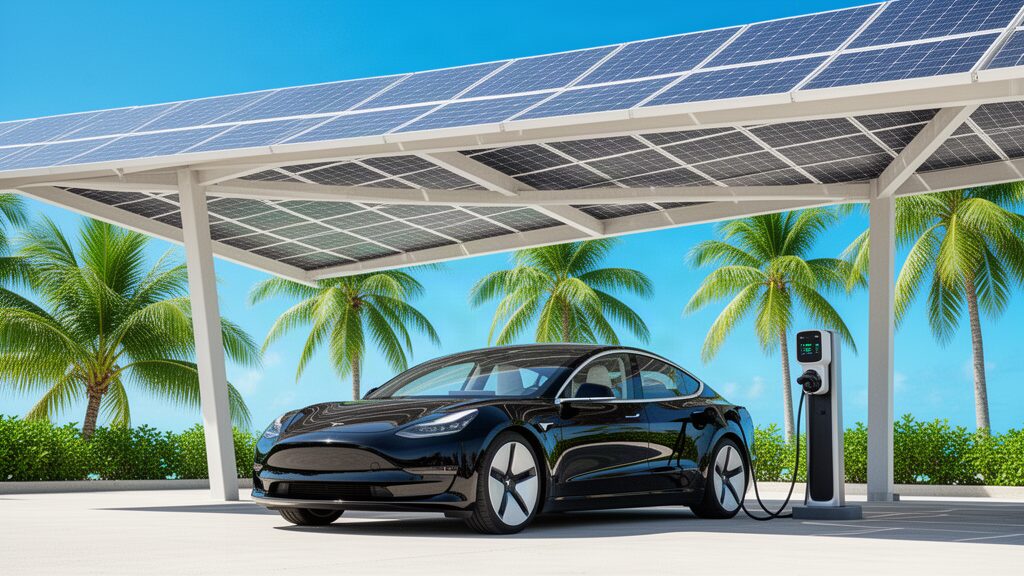
Barbados has admitted its power grid is nearing capacity, and its answer is a pilot so small that officials themselves keep stressing how small it is. “This pilot is only about one megawatt,” Horace Archer, a senior technical officer at the Ministry of Energy, said of the island’s new vehicle-to-grid and virtual power plant trial.
The idea is a good one. The pace is the problem.
How the Pilot Works
The one-year trial will test whether rooftop and commercial solar, battery storage and electric vehicles can be coordinated to steady the grid. A virtual power plant would link solar and batteries at participating sites so the utility can draw power and collect data. Vehicle-to-grid technology would let compatible electric cars feed stored power back while plugged in. One future option floated by officials would let motorists plug in at supermarkets or other businesses and have the utility pool that power safely.
Brian Haynes, director of renewable energy in the ministry’s Energy Conservation and Renewable Energy Unit, estimated the approach could deliver about 80 per cent of what a utility would want from a full distributed energy management system. “It would improve the reliability of the grid,” he said. A stakeholder workshop and demonstration was held at the Lloyd Erskine Sandiford Centre, where officials also pitched it as a way to cut dependence on imported fossil fuels.
Private Drivers Are Left Waiting
Here is the catch. The trial starts with public bodies and their partners only. Private motorists must wait until officials have worked out the technical and regulatory rules for selling power back, and the ministry has decided against letting commercial operators into the first phase. No payment formula or tariff for car owners exists yet. Haynes was careful to say any payments would be for services to the grid, “not a guarantee of substantial earnings”.
The wider project runs 24 months, design phase included. So a householder who bought an electric car this year to do their bit for Barbados’s renewable ambitions may wait two years just to learn whether, and on what terms, they can help the grid and be paid for it. Meanwhile the grid keeps edging towards its ceiling.
Who Gains and Who Pays
Haynes was frank that the utility, facing a sudden shortfall, might be willing to pay a few cents more per unit to avoid an outage, and that the regulator would cap those costs. That is the right instinct. But it also shows where the power sits: the utility and the State design the market, set the price and decide who may join. Consumers who have already invested in solar and batteries are being asked to wait while the rules are written around them.
Barbados has rightly built a reputation for climate ambition on the world stage. At home, ambition looks like letting thousands of solar roofs and car batteries earn a fair rate for keeping the lights on. A one-megawatt test run by government agencies is a sensible first step. It must not become the whole journey. The Ministry should publish a timetable for opening the scheme to private owners and the Fair Trading Commission should set out how payments will be decided, before the grid’s limits make the decision for them.