No Tomatoes, Dear Yams: Barbados Is Planning Christmas Dinner by Guesswork Again
Farm leaders say tomatoes will be scarce and yams dear this Christmas, while cucumbers, pumpkin and milk are plentiful. The bigger problem is that nobody planned for it.
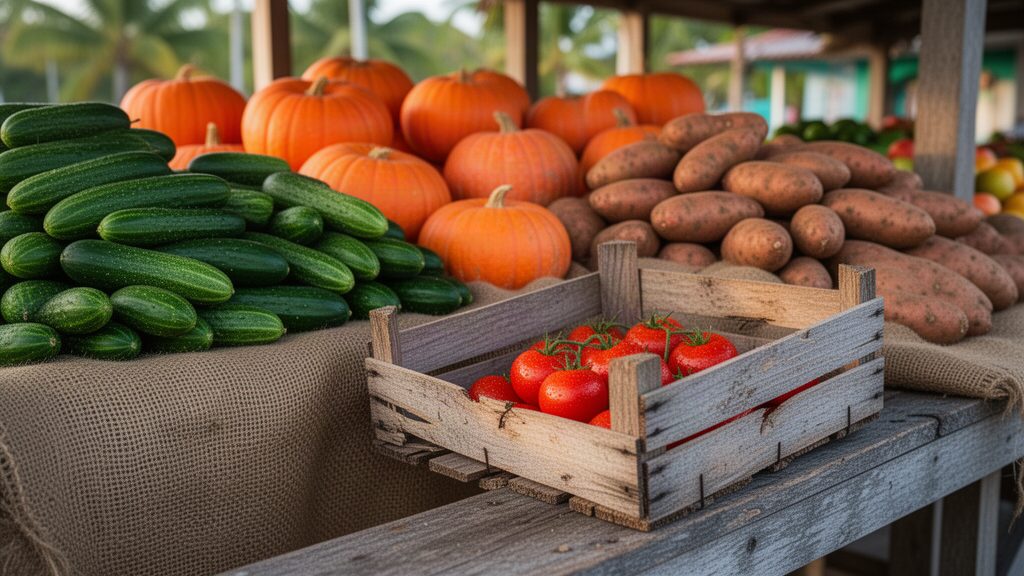
Barbadians are being warned in the third week of November that tomatoes will be scarce and local yams costly this Christmas. The warning is useful. It is also about three months too late to do anything with, and that is the real story of how this island feeds itself at the one time of year when everybody is shopping for the same plate.
What will and will not be on the table
The good news first. Henderson Williams, president of the Barbados Agricultural Society, says most local crops are in stable supply: cucumbers, melons, pumpkins, sweet potatoes, zucchini and watermelon. Some prices have actually fallen because so many growers have stock. He credits manageable rainfall and little flooding, with irrigated farms holding their output. Green peas, he says, should arrive on cue for the season.
Then the gaps. Dry conditions have hit yam production, and Williams expects “some scarcity, or the price might be higher than what we would desire”. Farmer Hamilton Corbin was blunter about the salad bowl: “Oh, tomatoes for sure. Tomatoes are gonna be scarce.” Long spells of heat, he explained, cut fruit production even on plants that look healthy. He has not yet seen local yams and is uneasy about carrots, beets and beans.
Livestock offers some comfort. McDonald Stephenson, the outgoing head of the dairy and beef producers’ association, expects milk output to beat last Christmas and says the past two months have already outstripped the same period last year. “Beef is always readily available,” he added.
Counting the beans in November
Notice what the country’s top farm spokesman could not say. Asked about beans, Williams had no firm assessment, because supply depends on how much farmers chose to plant. The Barbados Agricultural Development and Marketing Corporation, he said, is gathering more data to give a clearer picture.
Gathering data. In mid-November. For a holiday that falls on the same date every year. A state marketing corporation that does not know, five weeks before Christmas, how many beans are in the ground is not marketing anything; it is watching. Heat stress on tomatoes is not a surprise either. If hot spells reliably knock out the crop, then shade houses, heat-tolerant varieties and staggered planting schedules are the answer, and they need to be organised in August, not lamented in November.
Sorrel, the telling detail
The saddest line in the whole outlook is about sorrel. The drink is as much a part of a Bajan Christmas as great cake, yet Williams says commercial production has declined significantly and the crop is now left largely to hobby farmers. A country that talks constantly about food security and cutting its import bill has let its own Christmas drink slide into a backyard pastime.
None of this is the fault of farmers, who grow what pays and cannot control the weather. The failure sits with the agencies whose job is to forecast demand, tell growers what to plant and when, and make sure a predictable seasonal rush does not turn into a predictable shortage. Shoppers will pay for it at the till next month, and importers will happily fill the gap.
So enjoy the cucumbers and pumpkin, which will be plentiful and cheap. Then ask the Ministry of Agriculture a simple question in January: what is the planting plan for Christmas 2027, and who is responsible if the tomatoes run out again?