Scrap Metal Export Ban: Kamla Shuts Down a Whole Trade by December 31 Because the State Could Not Police It
Prime Minister Kamla Persad-Bissessar will ban all exports of scrap iron, copper and brass from December 31 after a year of attacks on WASA and T&TEC. It is the second ban in four years, and a confession that regulation failed.
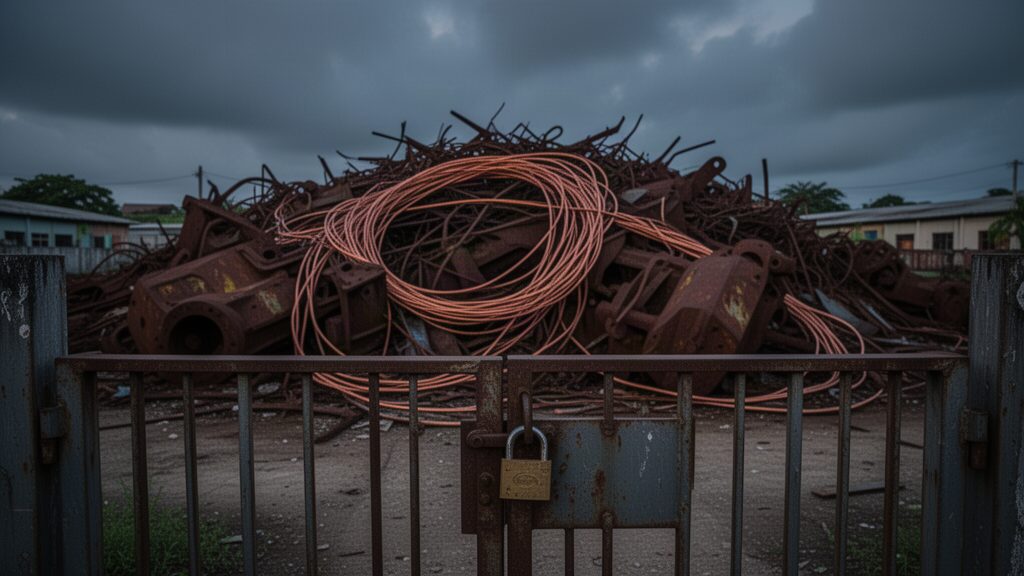
The scrap metal export ban announced by Prime Minister Kamla Persad-Bissessar is the bluntest instrument a government can pick up: when you cannot catch the thieves, close the market they sell into. From December 31, 2026, Trinidad and Tobago will allow no exports of scrap iron, copper or brass at all.
Plenty of people stripped of water and power by cable thieves will cheer. They have reason to. But the ban is also a confession, from this government and the one before it, that two decades of regulation never worked.
What We Know So Far
In a statement on her social media platforms, Persad-Bissessar said successive governments had tried for 20 years to work with scrap iron dealers and their representatives and had failed to bring the industry under control. She listed stolen manhole covers, road signs, electrical cables and fire hydrants, and called the theft of Water and Sewerage Authority and T&TEC infrastructure over the past year, which left thousands without water for weeks, the “final straw”.
“The scrap iron dealers cannot extract themselves from blame because it is they who keep purchasing the stolen items,” she said. Public safety and infrastructure, she added, “must always come before the profits of an organised crime industry”. She also said the national security services were prepared for any eventuality arising from the ban.
The damage is real. Five WASA facilities in Tobago were vandalised in March, including wells at Arnos Vale and Bacolet, and nine people were arrested, among them a WASA employee. Cables were stripped from a Penal well in September 2025, affecting about 4,000 consumers. The Tabaquite booster station was hit in June and again on November 18. T&TEC has reported a deliberately damaged high-voltage cable at its Harmony Hall substation in San Fernando and an attempted theft at its Abattoir substation in Port of Spain.
We Have Been Here Before
This is not the first scrap metal export ban. In August 2022 the Rowley administration imposed a six-month ban after copper theft hit WASA and TSTT, including stolen underground cables in San Fernando that cut phone and internet services to tens of thousands. Police recorded 162 scrap-theft reports and 136 arrests between January and August 2022. Dealers protested. The ban was lifted in February 2023 and trade resumed under the Scrap Metal Act, 2022, with a separate one-year copper export prohibition.
So the country has already tried a temporary ban and a new licensing law. The thefts came back. That should worry everyone, because it suggests the Scrap Metal Act was either never enforced properly or never fit for purpose. The government owes the public an honest account of which it was before it reaches for the sledgehammer.
Who Pays for a Total Ban
The Prime Minister speaks as though every dealer is a fence. Some plainly are buying stolen goods; that is a crime, and it should be prosecuted. But a total ban punishes the licensed operator along with the crook, and it does nothing on its own about the people climbing into booster stations at night.
The questions are obvious. How many dealers have been charged under the 2022 Act for handling stolen metal? What happens to legitimate workers in the trade after December 31? Will the ban be permanent this time, or lifted again when the protests start? And if criminals are as organised as the Prime Minister says, what is the police plan for them once the export route closes?
Banning exports may slow the thieves down. Catching them would be better. Five weeks’ notice and a social media post are not a policy. They are a warning shot, and the country deserves the full plan behind it.