
Guyana’s Heritage Law Protects the Buildings and Forgets the People: One Week From First Reading to Done
Guyana's National Heritage Preservation Bill cleared the Assembly a week after first reading, with no guaranteed Indigenous seat, no protection for intangible culture and wide ministerial power.
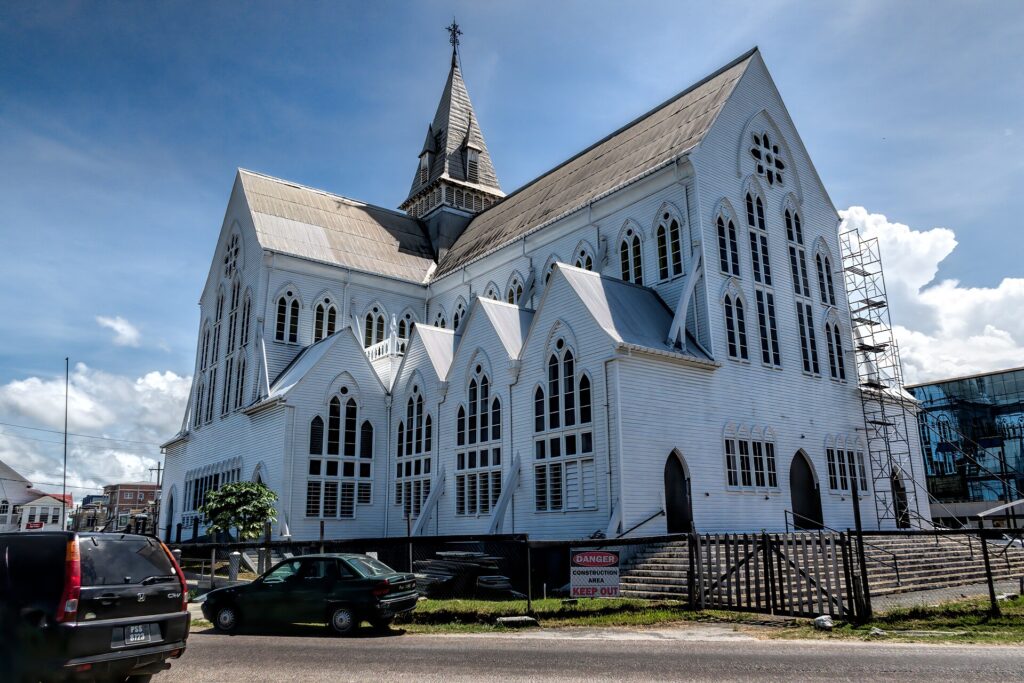
Guyana now has a law to protect its heritage, and it was rushed through so fast that the people whose heritage it is barely had time to read it.
The National Heritage Preservation Bill passed the National Assembly on Wednesday, roughly a week after its first reading. The government refused to send it to a special select committee. Of several opposition amendments, only one survived: a requirement that a report be laid before the Assembly. That is not consultation. That is a receipt.
Stones, not songs
APNU’s sharpest point is the simplest. The law concentrates on physical structures and sites. The intangible traditions, the music, the language, the customs that the party called “the heart and soul of Guyana”, get no protection at all. A heritage policy that guards a colonial building more carefully than a living tradition has its priorities upside down.
Worse is the treatment of Indigenous communities. APNU proposed a guaranteed voting seat on the new National Heritage Preservation Council for a nominee of the National Toshaos Council, and mandatory, meaningful consultation with village councils before decisions on heritage sites on or tied to their lands. The government rejected it. Guyana’s first peoples have a distinct legal relationship with their land; a council that can make decisions about sites on that land without them at the table is building trouble for the future.
A minister’s council
The law gives the minister broad power to appoint and remove council members and to issue policy directions. APNU wants transparent appointments, defined legal grounds for removal, protected terms and regular public reports so the council does not become an administrative arm of whichever government holds office. Those are ordinary safeguards in any serious democracy. Their absence tells you who the council is really designed to answer to.
Your house, their rules
The bill also lets the state restrict the alteration, transfer and sale of designated heritage properties, and allows compulsory acquisition in specified circumstances. For a family whose home is suddenly declared a heritage property, that is a freeze on their biggest asset. APNU wants accessible and impartial ways to challenge those decisions, independent valuations, fair compensation, and grants and technical help for owners. Without them, ordinary citizens will be pushed into expensive litigation simply to be treated fairly.
The government says drafting involved technical work and consultations. APNU’s reply is that early consultation on a draft is not the same as scrutiny of the final text, and on that it is plainly right.
Nobody serious opposes protecting Guyana’s heritage. The problem is a government that treats the National Assembly as a rubber stamp and treats the opposition’s ideas as noise. Indigenous representation, protection for owners and limits on ministerial power should have been fixed in committee. They can still be fixed by amendment. If the government means what it says about heritage, it will bring one.


