‘Everything They Asked For They Got’: Guyana’s Gas-to-Energy Project Wants Another $24.7 Billion and Still Has No Firm Switch-On Date
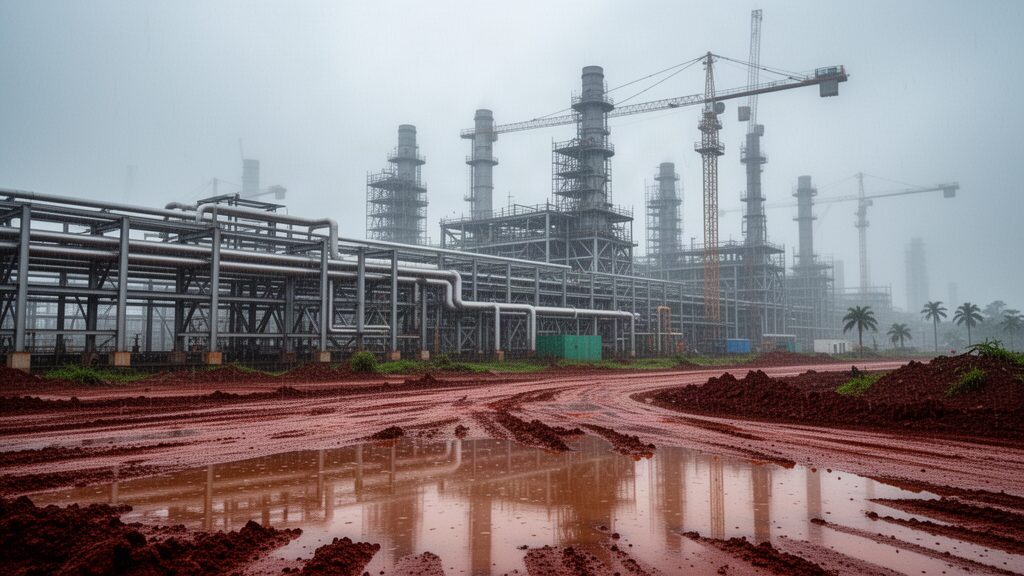
Guyana’s Government wants another $24.7 billion for the delayed Wales Gas-to-Energy project, months after a $19 billion top-up, and still cannot confirm when the plant will deliver power.
A contractor that is two years late has just been given everything it asked for, and the Prime Minister cannot remember how much that was. That is the state of Guyana’s flagship energy project, in the words of the people running it.
The Government is asking the National Assembly for a further $24.7 billion, about US$118 million, for the Wales Gas-to-Energy project. The request sits inside the supplementary financial paper presented on Wednesday by Dr Ashni Singh, the senior minister responsible for finance, and is described as funding to ‘facilitate an expanded work programme’. In June the same minister sought $19 billion for an ‘accelerated work programme’, which the House approved in July. Accelerated, then expanded. The adjectives change; the direction of the money does not.
A price that only moves one way
The contract with Lindsayca was signed at US$759 million. The contractor has since won a dispute with the Government worth roughly US$97 million, a payout the Prime Minister’s office confirmed in May. Now, according to local reporting, more than US$100 million in additional financing has been approved for the company.
Prime Minister Mark Phillips confirmed that approval on November 11 and said he could not recall the exact figure. ‘Everything that they asked for they got,’ he said, explaining that the aim was to ensure the company had no obstacle to finishing on schedule. It has also been reported that the US Embassy was pressing the Government to pay the contractor a further US$102 million, a claim that remains an allegation. President Irfaan Ali said in September that the company was seeking more resources but that no discussions were under way at the time.
The project was meant to be finished by the end of 2024. In August the Government said the contractor had committed to delivering 57 megawatts by December 2026. Asked on November 11 whether that was still on track, the minister of public utilities, Deodat Indar, gave no definite answer.
What the delay is costing
The scheme has three parts: a natural gas liquids plant and a 300-megawatt power station at Wales, fed by a 220-kilometre pipeline from the Liza fields. ExxonMobil built the pipeline, completed it in December 2024 and is now repairing it. The company has disclosed neither the cost of the repairs nor the price of the pipeline itself.
While the plant waits, the country pays twice. Importing heavy fuel oil for power generation since 2024 is expected to cost at least US$619 million, by one published estimate. Two Turkish power ships are on hire to prop up the grid at a rental put at GY$126 million a day by David Patterson of the Alliance For Change.
The promise and the accounts
All of this is in service of a pledge to cut electricity bills by half. It is a fine pledge. But every month of delay and every supplementary paper erodes the arithmetic behind it, and no updated calculation has been put before the public.
The questions are not complicated. What is the total now committed to this project, including the settlement? What did the contractor promise in exchange for the new money, and what happens if December passes without power? What will the pipeline cost, and who pays for the repairs? A Government with a comfortable majority can vote itself any sum it likes. What it cannot vote itself is credibility, and a Prime Minister who signs off on nine-figure top-ups without retaining the number is spending that faster than the oil money.