Antigua Wants Tourists to Pay to Meet Its Bees. It Is a Better Idea Than It Sounds
The GARD Center has launched a grant-funded beekeeping project in Mercers Creek with plans for an api-tourism hub. The idea is sound. The minister’s list of threats to bees points back at government.
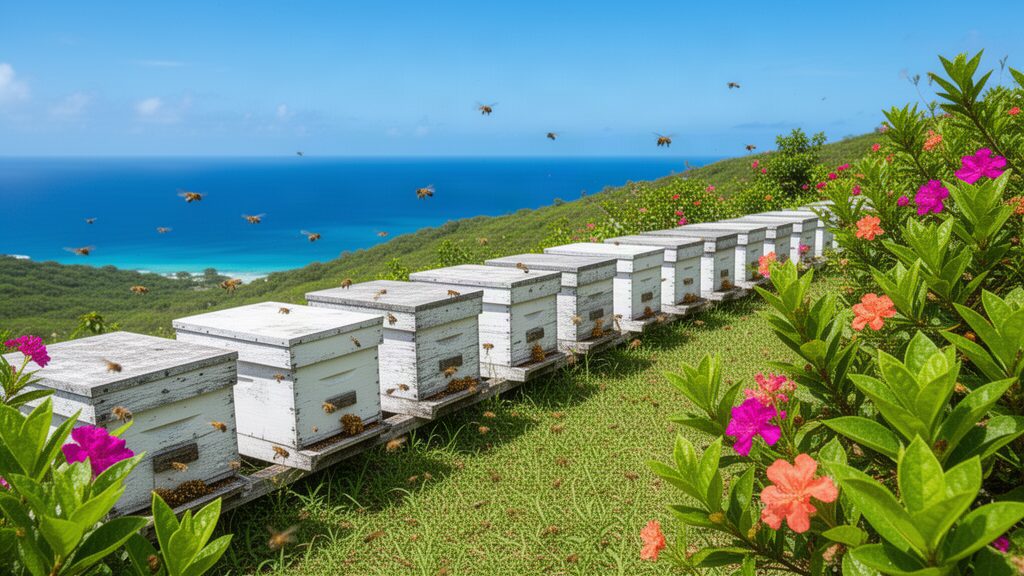
Antigua and Barbuda has spent decades selling the same two things to visitors, sand and sea, and wondering why so little of the money reaches the countryside. So a plan to put tourists in front of a beehive in Mercers Creek deserves a hearing, even if ‘api-tourism’ is a word only a grant application could love.
The Gilbert Agricultural and Rural Development Center has launched a sustainable beekeeping project there, with plans for a community-led Api-Tourism Hub and a Pollinator Forage Trail, plus better hive management, climate-resilient planting and public education. It is funded by a grant from the Global Environment Facility’s Small Grants Programme, implemented by the United Nations Development Programme. The initiative carries the title Building Livelihoods and Conserving Nature: Inclusive Beekeeping for Youth, Women and Men, and the slogan ‘Bee Wise, Bee Empowered!’
The pitch from the minister
Randy Baltimore, Minister of State in the Ministry of Agriculture, Lands, Fisheries and the Blue Economy, made the case at the launch. ‘Bees play an essential role in supporting our food systems, maintaining biodiversity and sustaining the natural environment upon which our communities depend,’ he said. ‘Simply put, when our pollinators thrive, our agriculture has a better chance to thrive.’
He named the pressures on the natural environment: climate change, shifting land use, urban development and natural disasters. And he sold the business side. ‘Imagine our beekeepers not only producing honey, but also becoming educators, entrepreneurs and ambassadors for sustainable agriculture. That is the promise of api-tourism,’ he said, adding that the hub could broaden the tourism offering while helping beekeepers, particularly women and young people, find new income.
Why it could work
Strip away the slogans and the logic is sound. A jar of honey sells once. A guided visit, a tasting and a walk along a forage trail sell every day a cruise ship is in port, and the money goes to a rural community rather than a hotel chain’s head office. It is the kind of small, local, hard-to-copy experience visitors increasingly say they want and that Antigua has been slow to supply.
It also gives young people a version of agriculture that is not just a cutlass and a hot field. Baltimore said he wants them to see farming as a career in which they can innovate and build businesses. Fair enough. A beekeeper who is also a tour guide and a brand owner is a more convincing advertisement for that than any ministerial speech.
The awkward item on the minister’s own list
Now look again at the threats he listed. ‘Shifting land use’ and ‘urban development’ are not acts of God. They are decisions, and in Antigua and Barbuda many of them pass across government desks. The minister who praises pollinators sits in the ministry responsible for lands. If bee habitat is being lost to development, his colleagues are among those approving it. A forage trail in one creek will not offset a planning system that treats bush as empty space.
The second caution is about grants. The Caribbean is littered with donor-funded projects that held a launch, unveiled a map, turned some symbolic soil and faded when the money ran out. This one had all three on day one, including a map of the proposed development and a groundbreaking led by GARD Center executive director June Jackson and the grant programme’s national coordinator, Natalya Lawrence.
The test is simple. In two years, are there paying visitors in Mercers Creek and beekeepers earning more than they do now? If yes, copy it across the island. If not, it was a ceremony. The bees, at least, will do their part.