Six Per Cent Built, Millions Paid: Guyana Fires 11 School Contractors, but Who Hired Them in the First Place?
At least 11 Education Ministry contracts in Guyana were terminated after contractors failed to deliver, two of them only six per cent built after large advances. The Attorney General promises lawsuits.
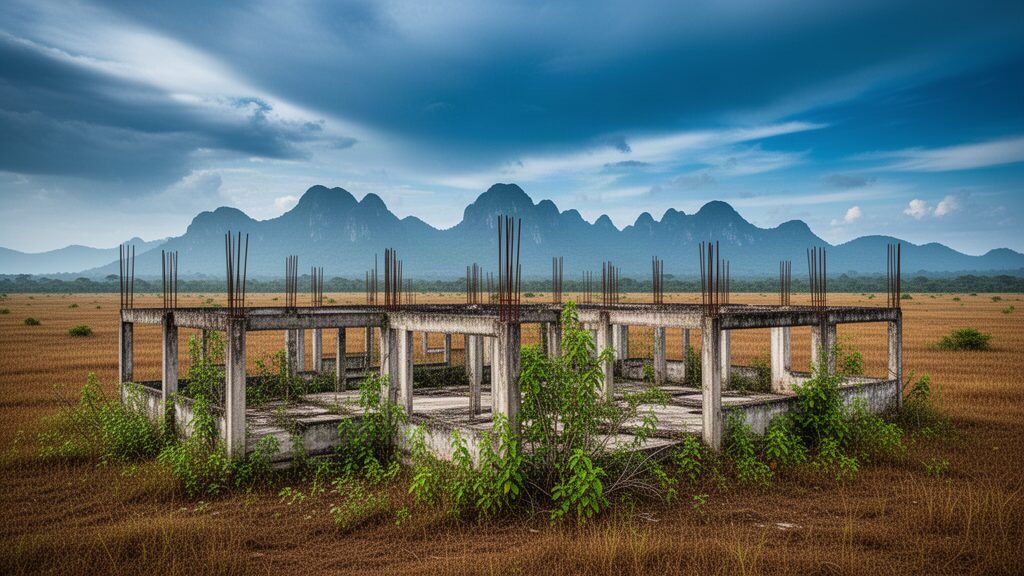
A $310 million dormitory for students at Jawalla was supposed to be finished in October 2025. A year later it is six per cent complete, and the contractor has collected a $46 million mobilisation advance. That single project tells you most of what you need to know about why at least 11 Education Ministry contracts have now been terminated, and why sacking contractors after the fact is not the same as protecting public money.
The Attorney General’s Chambers disclosed the terminations this week, saying its Contract Review Unit had examined them. Attorney General Anil Nandlall says the state will go further and sue where necessary. “The requisite legal steps will now be taken,” he said on his programme, promising claims for damages, other losses and liquidated damages where contracts allow. Good. But the lawsuits are the end of a failure, not the fix for it.
The List
The terminations reach across the country, and especially into the hinterland. At Monkey Mountain in Region Eight, a dormitory, multipurpose hall and kitchen contract was ended on June 29 for failure to execute and insufficient financial, technical and human resource capacity. At Kwakwani Secondary in Region 10, a female dormitory contract was terminated in March and a separate design-and-build reconstruction in July, both for failing to start or carry out works. Dora Secondary on the Linden Highway lost its contractor in March for failing to mobilise and ignoring official correspondence. Karasabai Secondary in Region Nine was terminated on October 30 for delays beyond the contractual limit, and a contractor at Vreed-en-Hoop Secondary was removed on October 27 for poor progress. Three more, at Stewartville, St Cuthbert’s Mission and Wiruni Nursery, were ended with no reason given.
The two largest were both terminated on November 5. Besides Jawalla, a $149 million multipurpose hall and kitchen at Kopinnang in the North Pakaraimas, awarded in March 2025 with a November 2026 deadline, was reported to be six per cent complete with a $52 million advance paid. The ministry said termination was recommended “in view of the unsatisfactory progress”. At Jawalla the contractor had asked for an extension to February 2026; the ministry said the project was showing “significant delays in execution”.
The Question Nobody Is Answering
Several contracts were ended because the contractor lacked the money, equipment or staff to do the work. That is something an evaluation committee is supposed to discover before an award, not something a ministry finds out a year after paying an advance. Who scored these bids? What capacity checks were done? Were any of these firms already failing on other state jobs when they won these? Until the government answers that, terminating contracts is just closing the stable door.
There is also the money. Advances of $46 million and $52 million on two projects that barely broke ground are not small sums. Mobilisation and performance securities exist precisely for this situation, and the public should be told how much the state will actually recover by calling them in, and how quickly.
Children Pay the Price
The people losing most are not the contractors or the ministry. They are students in Regions Seven, Eight, Nine and Ten who were promised dormitories, labs, kitchens and classrooms and who will now wait for re-tendering, new mobilisation and, very likely, higher prices. Hinterland children already travel furthest and board longest to get a secondary education. Every year of delay is a year of overcrowding or no place at all.
Nandlall says the government is policing “all public contracts”. Then publish it: a full list of terminated contracts across ministries, the advances paid, the securities recovered, and the names of the evaluation officials who recommended each award. Accountability should start before the contract is signed.