El Niño Dry Season Warning: Drought, Extreme Heat and Bushfires Are Coming, and Caribbean Governments Have Been Told in Time
CIMH climatologist Adrian Trotman warns that El Niño could bring intense drought, heat and bushfires to the Caribbean in the 2026-2027 dry season.
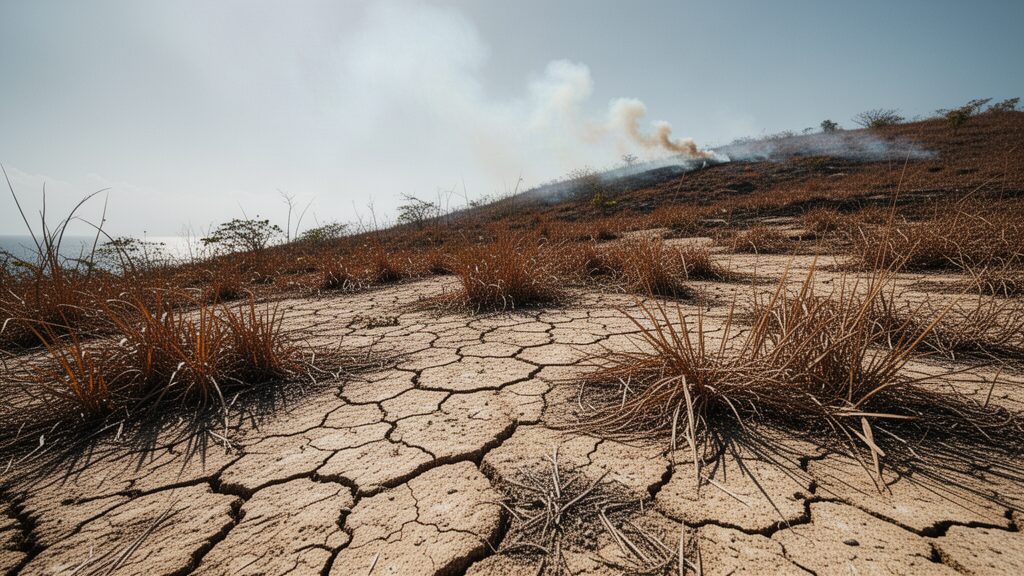
El Niño is about to make the Caribbean dry season hotter, thirstier and more flammable, and the region’s top climate scientists are saying so months before the taps run low. Adrian Trotman, Chief of Applied Meteorology and Climatology at the Caribbean Institute for Meteorology and Hydrology in Barbados, told media workers in St Vincent on Tuesday that the region must now focus on what El Niño could do to the 2026-2027 dry season.
What We Know So Far
Trotman named three main threats: drought, extreme heat and bushfires. ‘These three things in the dry season, especially when there’s an El Niño, could be very intense,’ he said. He warned that excessive heat could be most dangerous late in the dry season, and that reduced rainfall could hit water availability.
El Niño is the warm phase of the El Niño Southern Oscillation. It comes every two to seven years, usually lasts nine to twelve months and tends to peak around December. Some observers are already calling this one a ‘Super El Niño’. Trotman pointed to the 2014-2016 and 2019-2020 episodes as reference points for what the region might face.
He was speaking at a stakeholder forum attached to the Caribbean Climate Outlook Forum, the third such media training session after 2017 and 2025. The official dry season forecast for 2026-2027 was due to be presented on Wednesday.
The Warning Is Free. Preparation Is Not
This is the part of climate change the Caribbean cannot blame on anyone’s failure to warn it. The scientists have done their job. The question is whether water utilities, agriculture ministries, fire services and disaster agencies do theirs before February, not after.
The effects are already reaching household budgets. In Jamaica, the central bank has just cited El Niño as a reason food prices will stay high, a reminder that drought is not only a farm problem but a cost-of-living problem. A dry season that is worse than usual means lower yields, dearer vegetables, more water lock-offs and more grass and bush fires on hillsides already scarred by previous droughts.
What Governments Should Do Now
Every water authority in the region should be publishing its storage levels and its rationing plan now, while reservoirs are still relatively full, so households and businesses can prepare. Farmers need early access to drip irrigation, water tanks and drought-tolerant seed, not emergency relief once crops have failed. Fire services need equipment and staffing for a bushfire season that may be longer and fiercer. And health ministries should be ready for heat stress among the elderly and outdoor workers late in the season, exactly when Trotman says the danger peaks.
The people who pay for poor preparation are always the same: small farmers, households without storage tanks, and communities at the end of the pipeline. The forecast is out this week. Any government that is caught unprepared in March will have no excuse.