Hurricane Melissa Relief Scandal: Weevils in the Rice, Homes Unaccounted For, and a Prime Minister Who Took Charge but Not the Blame
The Auditor General found spoiled food, disputed home counts and misused donor money at ODPEM. The Prime Minister took control of the agency, so he should answer for it.

Hurricane Melissa relief was supposed to be the moment the Holness government proved it could look after people at their lowest, and instead the Auditor General has found rice crawling with weevils, crackers gone bad and a paper trail so thin that nobody can agree how many donated homes actually reached a family. More than a year after the Category 5 storm tore through western Jamaica, that is the record the Office of Disaster Preparedness and Emergency Management has to defend, and the Prime Minister put it in his own office.
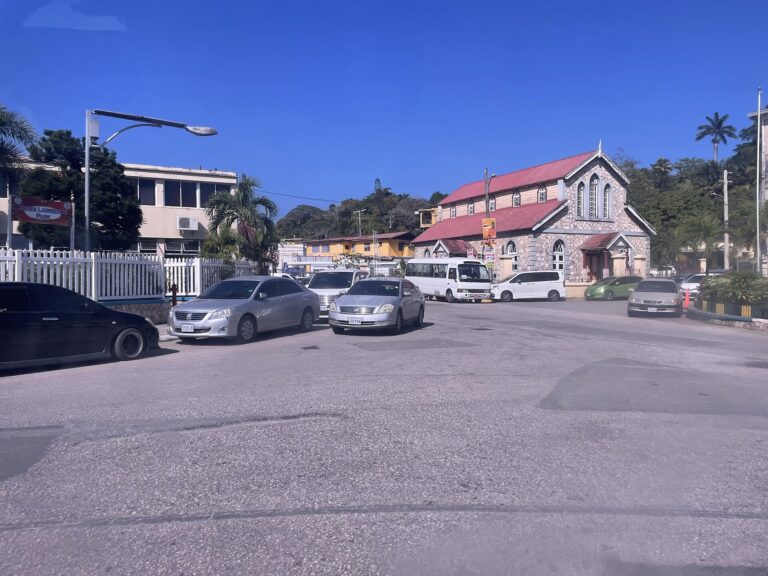
On Wednesday the People’s National Party took the argument out of Gordon House and onto the street at Cross Roads in St Andrew, starting at about seven in the morning. Mark Golding told the crowd that the relief effort had been a failure of leadership, calling it “weak and cowardly”, and the party promised more demonstrations across the island. It is easy to dismiss a street protest as theatre. It is harder to dismiss an audit.
What We Know So Far
Auditor General Pamela Monroe-Ellis reported serious failings at ODPEM in record-keeping, storage and accountability. Donated rice became infested, crackers and other food spoiled, and roughly $45 million in donated money was used to clear relief goods through customs on behalf of third-party donors, which is not what people gave that money for. On the 200 container homes donated by China, the audit said only 31 could be accounted for.
ODPEM’s Director General, Commander Alvin Gayle, rejects that reading. He says all 200 homes are accounted for, with 169 handed out and 31 still in the agency’s custody, and that every dollar that passed through ODPEM can be traced. The government says no donated funds are missing, that sweeping administrative changes are under way, and that Gayle is staying. Golding, for his part, told the crowd that 15 containers of relief had never even been opened. So the two sides are not just arguing about blame; they are arguing about basic facts, which is itself an indictment of how the operation was run.
Overseas Jamaicans who sent goods are also pushing back, rejecting any suggestion that donations arriving close to their expiry dates explain the waste. Diaspora leaders want the government to own the failure rather than pass it to the people who answered the call.
The Buck Was Moved to Jamaica House
This is where the government’s defence gets weakest. Shortly after the storm, in November 2025, ODPEM was taken from Desmond McKenzie’s local government ministry and placed in the Office of the Prime Minister. That move was sold as grip and urgency. Damion Crawford put it bluntly at the protest: the minister was treated as not competent enough to run it, yet now that the failures are public, McKenzie is the face Jamaicans see. Crawford wants Holness to address the nation himself. He is right. You cannot centralise control and then decentralise responsibility.
Dayton Campbell went further, accusing the Prime Minister of a “messianic complex” and vowing that if questions are blocked in Parliament the party will hold “the people’s parliament” in the streets and in school rooms. That is political rhetoric, but the underlying complaint is fair: an audit of this seriousness deserves a full ministerial answer, not a defence delivered by the official whose agency was audited.
Who Pays While Gordon House Argues
The cost lands in the west. Golding described families still under tarpaulin, people staying with friends and relatives, schools not repaired and small shops that lost their stock and never reopened. Angela Brown Burke said protecting the poor and vulnerable is one of the most basic duties of any government. Food that rotted in a warehouse did not feed anyone in Westmoreland or St Elizabeth.
The government should do three things now: publish a full, item-by-item reconciliation of every container and every home, explain the $45 million in customs clearance and who benefited, and have the Prime Minister answer for an agency he chose to run. Insisting nothing is missing is not the same as proving it.