One Transformer, One Switch, a Whole Island in the Dark: Antigua’s Blackout Explained and Not Excused
APUA says Tuesday's islandwide blackout in Antigua began when crews tried to energise a transformer at the Blackpine Power Plant. Power took nearly three and a half hours to restore.
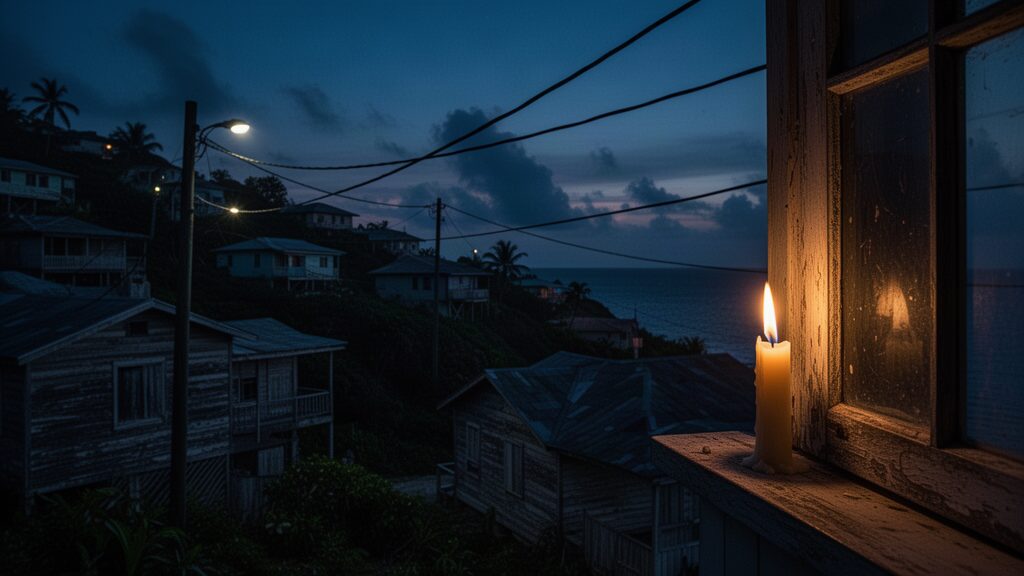
At about 3:35 on Tuesday afternoon, every light in Antigua went out. Not a parish, not a feeder: the whole island. The Antigua Public Utilities Authority has now explained what happened, and the explanation is more alarming than the outage. The national grid collapsed because crews tried to switch on a single transformer.
APUA’s account
According to the authority’s statement, crews were transferring power from one transformer to another during routine system checks when a problem developed with the outgoing 11-kilovolt circuit breaker at the Blackpine Power Plant. They carried out maintenance on the breaker and then attempted to energise the transformer. The system collapsed during that attempt.
Restoration was not clean. APUA and its generating partner APC isolated the fault and began bringing customers back, but there were several further interruptions as operators tried to match generation to demand and keep the grid stable. The authority says it had enough generating capacity, but that crews faced delays bringing the liquefied natural gas units and other generators online. Power was fully restored by about 7 p.m., some three hours and 25 minutes after it failed.
APUA says it and APC will review the sequence of events to reduce the likelihood and duration of similar outages. It acknowledged the inconvenience and thanked customers for their patience.
Read that again
Give the utility credit for telling the public the cause within a day, in plain language. Many Caribbean utilities would have said “technical difficulties” and left it there.
Now consider what it admits. A grid serving an entire country has a point where one breaker and one transformer, handled during routine checks, can take everything down. Engineers call that a single point of failure. A properly protected system is designed so that a fault in one place trips that section and the rest keeps running. On Tuesday the protection either did not operate or was not there.
Then there is the restart. APUA says capacity was not the problem; getting the generators running was. A power system that takes more than three hours to recover from a total shutdown, with repeated false starts, has not rehearsed for one. Hospitals, the airport, water pumps and every business with a freezer depend on how fast that recovery happens.
This was the mild version
Tuesday’s failure happened on a calm afternoon, with staff on site and no storm damage to work around. Imagine the same sequence at night in the middle of the tourist season, or in the hours after a hurricane when the grid is being brought back in pieces.
“We will review” is where every utility begins and where too many end. The Minister responsible for public utilities should require APUA to publish the findings: why a routine switching operation was able to collapse the system, what protection is being installed to stop it, how long a full restart is supposed to take, and whether customers will be compensated for spoiled stock and damaged equipment.
Antiguans already pay heavily for electricity. For that money they are entitled to a grid that cannot be switched off by accident.