Barbados Promises $200,000 to Rebuild Your Home After a Disaster. Read the Small Print First
Barbados' proposed Resilience and Regeneration Fund offers grants of up to $200,000 for destroyed homes and one per cent loans for tanks and generators. Key details are still missing.
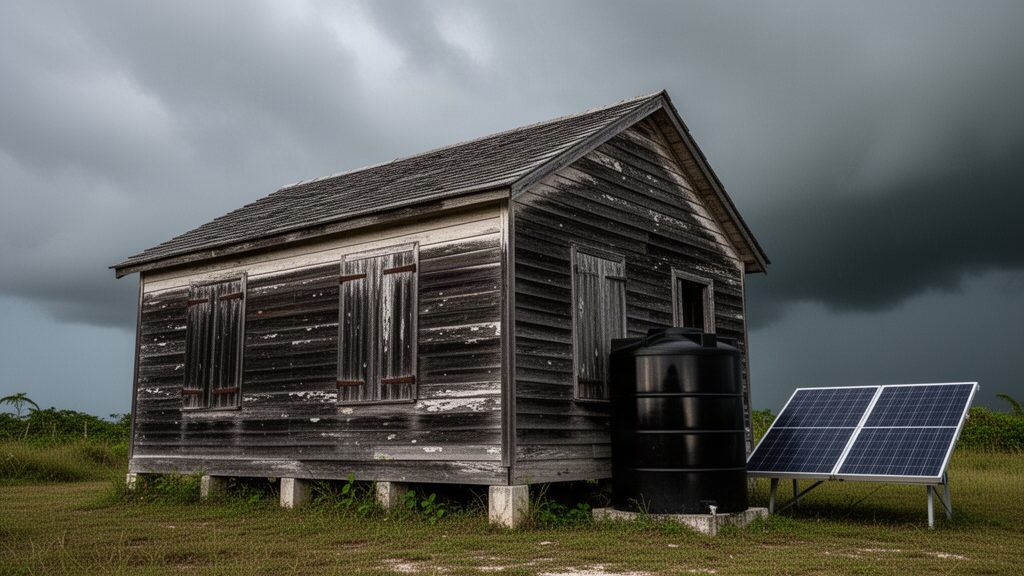
The Barbados Government is offering something most Caribbean families can only dream of: a grant of up to $200,000 to rebuild if a disaster destroys your home. Finance Minister Ryan Straughn laid out the plan in Parliament on Tuesday, and on paper it is the most serious attempt in the region to stop a hurricane turning working people into paupers. On paper is where the questions begin.
What is on offer
Under the proposed Resilience and Regeneration Fund, households with a combined income of no more than $75,000 whose homes are destroyed would qualify for grants of up to $200,000 to repair or rebuild. Qualifying small businesses could receive up to $500,000. In a mass disaster, agencies could apply on people’s behalf, with claims validated by the Department of Emergency Management and, where relevant, the Barbados Fire Service, so that money moves once ownership, income and damage are confirmed.
The fund would also pay for emergency accommodation. Straughn recalled how few shelter options there were after Hurricane Elsa, and said the fund, working with the Ministry of Housing, would “identify a space and make sure that in a real emergency, or if someone’s home is burnt down, there is a place where people can go”.
Before any disaster, households could borrow up to $25,000 at one per cent interest for water tanks, electric pumps, standby generators and renewable energy systems. “This is concessional financing to be able to build resilience,” the minister said.
Why it deserves support
The idea is right. Every storm season the region relearns that the poor are uninsured, that relief arrives late, and that rebuilding is left to charity and relatives overseas. A standing fund with rules written in advance beats a telethon. Cheap loans for tanks and generators before the wind blows are smarter than tarpaulins after it.
Now the small print
Start with the word “ownership”. Many Barbadians, especially in older districts, live in houses they own on land they rent, or in family property whose title was never sorted out after a grandparent died. If proof of ownership is the gate, some of the people most likely to lose everything are the least likely to get through it.
Then the income line. A household earning $75,000 qualifies; one earning a little more gets nothing, however flattened its house. A cliff like that invites both hardship and creative paperwork. A sliding scale would be fairer.
Then “up to”. The headline is $200,000. The reporting does not say what a typical award would be, how big the fund is, or what happens when a serious hurricane destroys more houses than it can cover. A fund that can rebuild fifty homes is a welfare programme. One that can rebuild five thousand is a national insurance scheme, and it needs to be capitalised like one.
Finally, speed. Three agencies validating each claim sounds careful. After a major storm, with those same agencies overwhelmed, it could mean months.
None of this is a reason to vote the Bill down. It is a reason for Straughn to answer four questions before it passes: how much is in the fund, who qualifies without clean title, what the average grant will be, and how many days a family should expect to wait. Good intentions do not put a roof back on.