A Fire in Swan Street Would Meet a Wall of Stalls. Bridgetown Has Now Been Told
An emergency drill found that stalls in Swan Street could hamper firefighters, even as the fire chief reports hydrants are in their best shape in years. One half of the problem is fixed. Now the other.
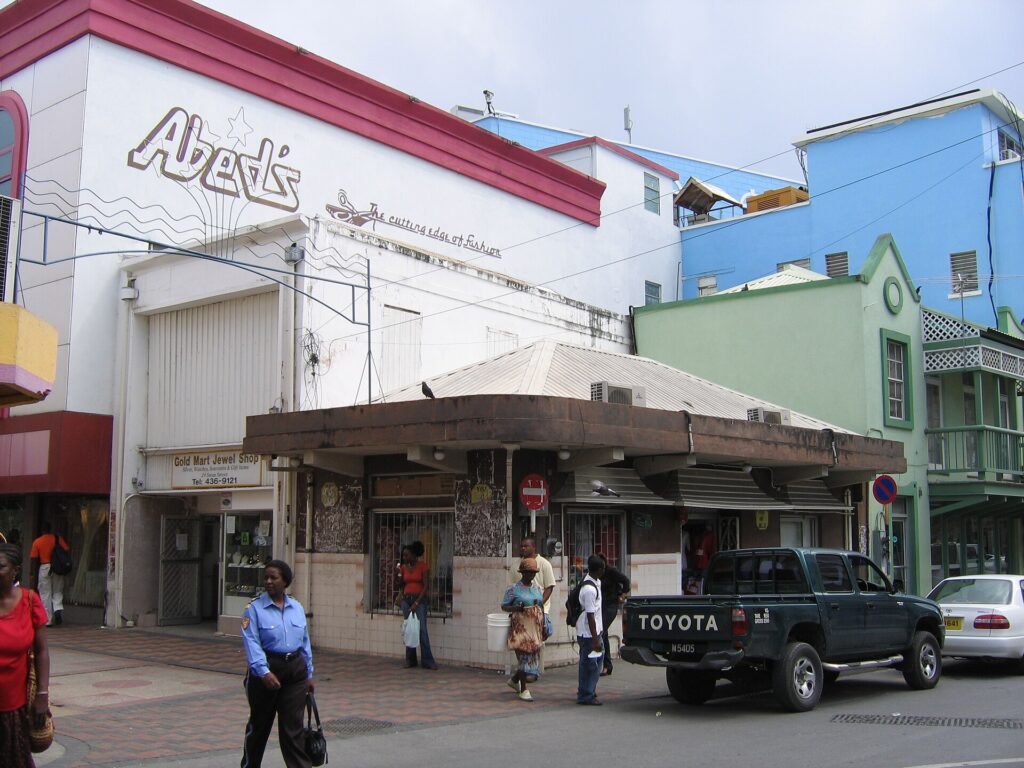
Barbados ran a fire drill in the busiest shopping street in Bridgetown on Wednesday and learned what every shopper squeezing through it already knew: if Swan Street burns, the fire service will struggle to get in. Vendors and their merchandise occupy parts of the roadway, and that, the exercise found, could pose challenges for first responders trying to reach an emergency there.
That was one of the key findings of a coordinated drill held to test how well the authorities can access the area and respond. It is a useful finding. It is also not a new one. Nobody needed sirens and a stopwatch to see that a narrow city street lined with stalls is hard to drive a fire tender down. What the drill has done is remove the excuse. The risk is now on the record, discovered by the State’s own exercise.
The good news: the hydrants work
There is real progress to report on the other half of the firefighting problem. Chief Fire Officer Errol Maynard said hydrants across Barbados are in better condition than in previous years because the Barbados Fire Service has stepped up inspections. Crews now check hydrants weekly, including during routine operations. ‘Even up to this morning, the guys tested the hydrants when they went to the drill in Swan Street,’ he said.
The old nightmare was the buried hydrant. ‘Years ago, we would have had cases where you knew a hydrant was there but then the road got repaved and then you could not find them,’ Maynard said. Resurfacing by the Ministry of Transport and Works or private contractors still occasionally covers part of one, and firefighters clear the obstruction, but he said it happens far less than it used to. Defective hydrants are reported to the Barbados Water Authority. ‘In most cases,’ he said, they are fixed.
Water pressure, long a complaint in certain districts, has also improved, which Maynard put down to remedial work by the water authority in areas that traditionally had low pressure.
Now the harder half
Credit where it is earned: weekly checks are dull, unglamorous work, and they are the difference between a hose that runs and one that does not. But note the phrase ‘in most cases’. A hydrant reported and not repaired is a hydrant that fails on the night. The fire service and the water authority should publish how many are out of order at any time and how long repairs take.
And a working hydrant is no use to a truck that cannot reach the building. That brings the matter back to Swan Street, and to a choice the authorities have dodged for years. The vendors there are not the villains. They are small traders earning a living in the one place the customers are, and for decades the State has let the street arrange itself around them. Clearing them out after a drill would be the lazy response.
Do the boring thing
The serious response is a plan: a marked emergency lane that stays clear, stalls that can be moved in seconds, and vendors who have been told where to go and practised it. That means the fire service, the police, the city’s managers and the vendors sitting down together, which is harder than issuing a press statement about lessons learned.
Barbados has now tested the scenario and written down the weakness. If a real fire comes to Swan Street and the tenders are stuck behind racks of clothes, nobody in authority will be able to say they did not know. Fix the access the way the hydrants were fixed: patiently, weekly, and before the emergency rather than after it.