Guyana Approves a US$12.5 Billion Gas Project and Quietly Lets Exxon Dip Into Its Profits Again
Saipem and SBM Offshore have won major contracts on ExxonMobil's US$12.5 billion Longtail gas project. Guyana approved it without ring-fencing, so its profit share is set to fall.
Guyana has just signed off on its eighth offshore development, a US$12.5 billion gas project called Longtail, and the contracts are already flying: up to US$1.5 billion to an Italian engineering firm, and a sixth production ship for a Dutch builder. What did not make the celebratory announcements is the part that matters most to Guyanese: according to local reporting, the country’s share of oil profits will be cut to help pay for it.
The deals
Italian contractor Saipem said on 17 November that ExxonMobil Guyana Limited has authorised it to proceed with the Longtail subsea works in about 1,750 metres of water in the Stabroek Block. The contract is estimated at between US$1 billion and US$1.5 billion and covers the engineering, procurement, construction and installation of subsea structures, umbilicals, risers and flowlines, with work expected to take around four years. It is Saipem’s eighth Exxon job in Guyana. Fabrication will be done at its yard in Sardinia; logistics will run through the Vreed-en-Hoop shore base using local suppliers.
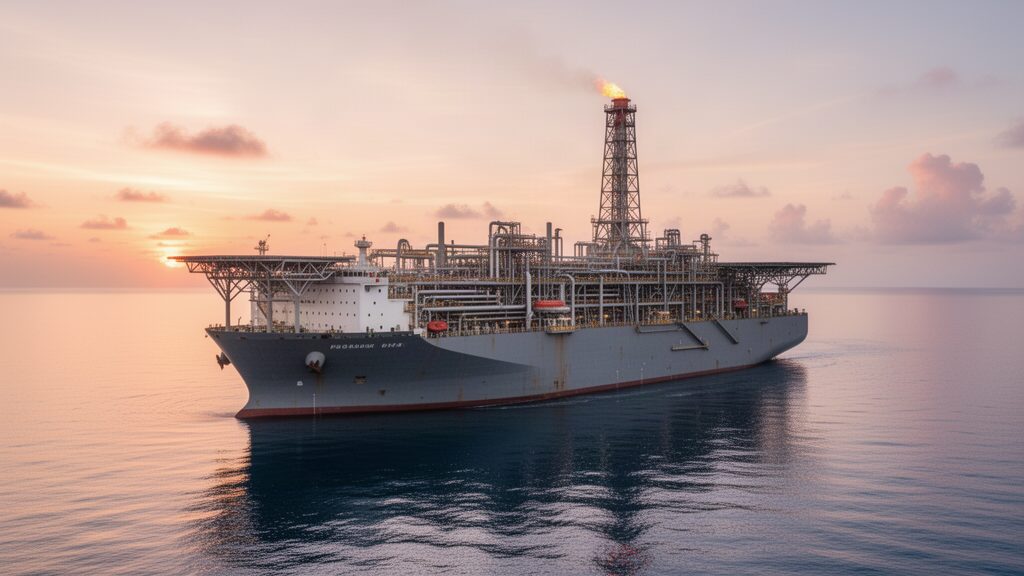
Separately, SBM Offshore announced contracts to build and install the project’s floating production, storage and offloading vessel, its sixth for the block, which it expects to operate for an initial ten years. The ship is designed to handle 1.2 billion standard cubic feet of gas and 250,000 barrels of condensate a day.
The Ministry of Natural Resources says Longtail will be Guyana’s first non-associated gas project, targeting nine reservoirs with 27 production wells and 18 gas injection wells, with first production expected before the end of 2030 and roughly 776 million barrels of condensate over 30 years. Exxon operates with partners Hess and CNOOC.
The missing clause
Now the catch. The project was approved without a ring-fencing provision. In plain terms, ring-fencing stops an oil company charging the cost of a new development against the revenue of fields already producing. Without it, the bill for Longtail can be recovered from oil now flowing, before profit is split.
Reporting in Georgetown says Guyana’s share of profits had recently risen to 39.8 per cent after Exxon recovered some US$55 billion in earlier investment, and that this share will now be reduced so the company can finance the new project. It also notes that President Irfaan Ali had promised to seek expert advice on how future projects would be financed.
Who gains, who waits
So look at the order of the queue. An Italian yard gets years of fabrication work. A Dutch company gets a ship to build and a decade-long operating contract. Exxon and its partners get a new field paid for largely out of cash that was finally starting to reach the Guyanese treasury. And Guyana gets the logistics, a promise of gas onshore and a profit share that falls just as it had begun to climb.
The ministry says the licence contains new provisions, including a gas utilisation and export study. That is welcome and it is not the point. The single most valuable protection a producing country can write into a licence was left out, eight projects in, by a government that has had a decade to learn how this works.
Guyanese are owed a straight answer from the Minister of Natural Resources: what will the profit share fall to, for how long, and what expert advice, if any, said that was a good deal?